
Reliable Used Hyundai Models Under $20,000
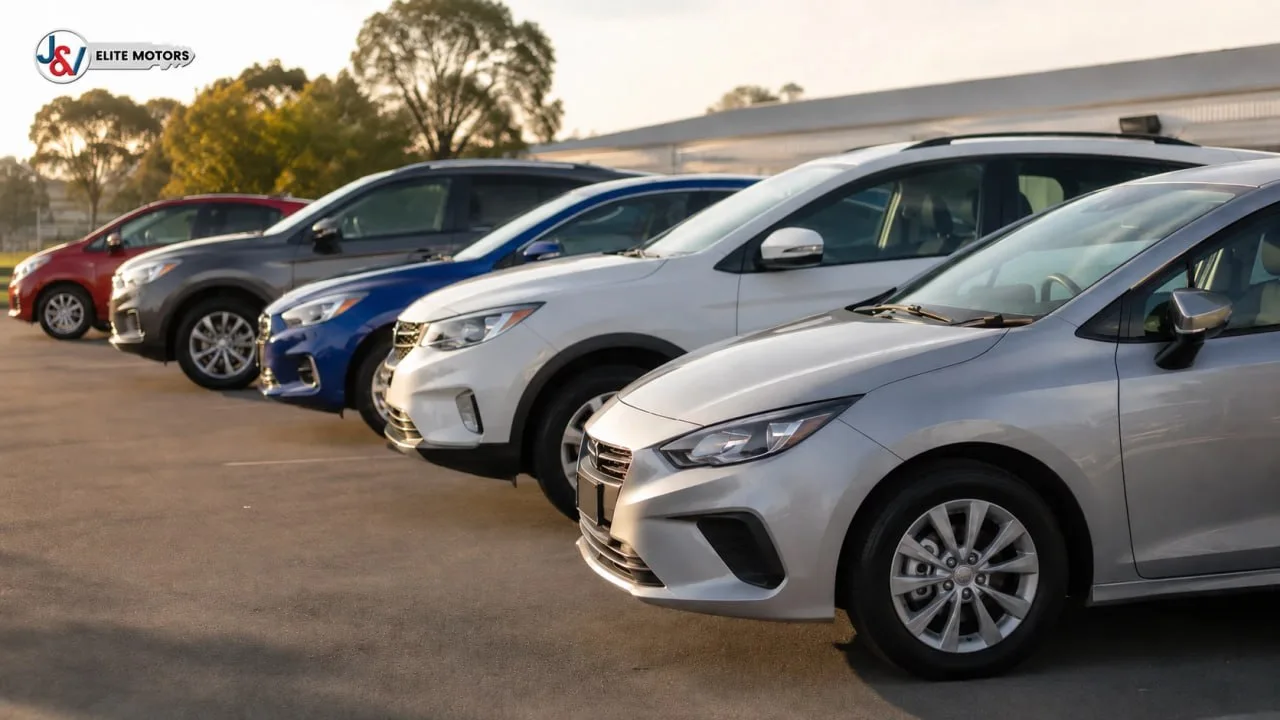
A used Hyundai under $20,000 buys you plenty of cars in 2026. The i30, Elantra, Tucson, Accent, iX35 and early Kona all sit inside this budget. The i30 is the safest all-round pick, the Tucson suits families, and the Accent is the cheapest way in. Check service history, outstanding recalls and gearbox behaviour before you buy any of them.
Key takeaways
The i30 is the default pick. Choose the 2017-onwards PD series with the 2.0-litre petrol and a conventional automatic. Expect $13,000 to $19,500.
Avoid the 1.6 diesel with the dual-clutch gearbox. It shudders at low speed and wears clutches from around 80,000km.
Three models carry live recalls: Tucson and Kona. All are repaired free by a Hyundai dealer — check the VIN first.
Factory warranty may still be running. Five years, unlimited kilometres, from first registration, and it transfers to you.
Budget $3,850 to $5,950 a year to run one, covering servicing, registration, insurance, fuel and tyres.
Service history beats low kilometres every time at this price.
Why is Hyundai a strong second-hand buy in Australia?
Hyundai is a strong used buy because it sells in high volume here, so parts are cheap and plentiful, servicing is capped-price and predictable, and the factory warranty transfers to you.
Hyundai has been selling cars in Australia since 1986. That volume matters when you buy second-hand. Parts are everywhere, independent mechanics know the engines, and resale holds up.
Three things work in your favour.
Parts are cheap and easy to get. A common service item on an i30 costs far less than the same part on a European hatch.
Servicing is predictable. Hyundai publishes capped-price servicing for most models, so you can look up what a scheduled service should cost before you commit.
Warranty can still be running. The standard cover is five years with unlimited kilometres from the date of first registration, and it transfers to you as the new owner. A 2022 or 2023 car bought today may still have factory cover left. Commercial vans like the iLoad get five years or 160,000km, whichever comes first.
Worth knowing: The brand’s reputation improved sharply from about 2015 onwards, when local suspension tuning and better interiors arrived. Cars built before then are cheaper for a reason.
Which Hyundai models fit under $20,000?
Eight models regularly sell under $20,000 in Australia: the i30, Elantra, Tucson, Accent, iX35, Kona, Venue and older iLoad. The i30 and Tucson are the two most common on the used market.
Model | Years under $20k | Body type | Indicative price | Best for | Watch out for |
|---|---|---|---|---|---|
i30 (PD) | 2017–2020 | Small hatch | $13,000 – $19,500 | All-round daily driving | Early PD infotainment glitches |
i30 (GD) | 2012–2017 | Small hatch | $9,900 – $15,000 | Tight budgets | Diesel DCT shudder, DPF on short trips |
Elantra (AD) | 2016–2020 | Small sedan | $12,000 – $19,000 | Boot space, quiet ride | Firm ride on SR variants |
Tucson (TL) | 2015–2019 | Medium SUV | $12,500 – $19,500 | Families, prams, dogs | ABS module and engine recalls |
Accent (RB) | 2013–2019 | Light hatch/sedan | $6,000 – $15,400 | First cars, learners | Basic safety kit on early cars |
iX35 (LM) | 2012–2015 | Medium SUV | $8,500 – $14,000 | Cheap SUV space | Age-related suspension wear |
Kona (OS) | 2018–2020 | Small SUV | $16,000 – $20,000 | Style, high seating | Piston ring recall, 12V battery drain |
Venue (QX) | 2019–2021 | Light SUV | $16,500 – $20,000 | City parking, low costs | Modest boot, no AWD |
About these prices: Price ranges are indicative and drawn from published Australian valuation data. Condition, kilometres and service history move these numbers by thousands either way.
You can see which Hyundais we currently have in stock to compare against real Melbourne pricing.
Is a used Hyundai i30 a good buy?
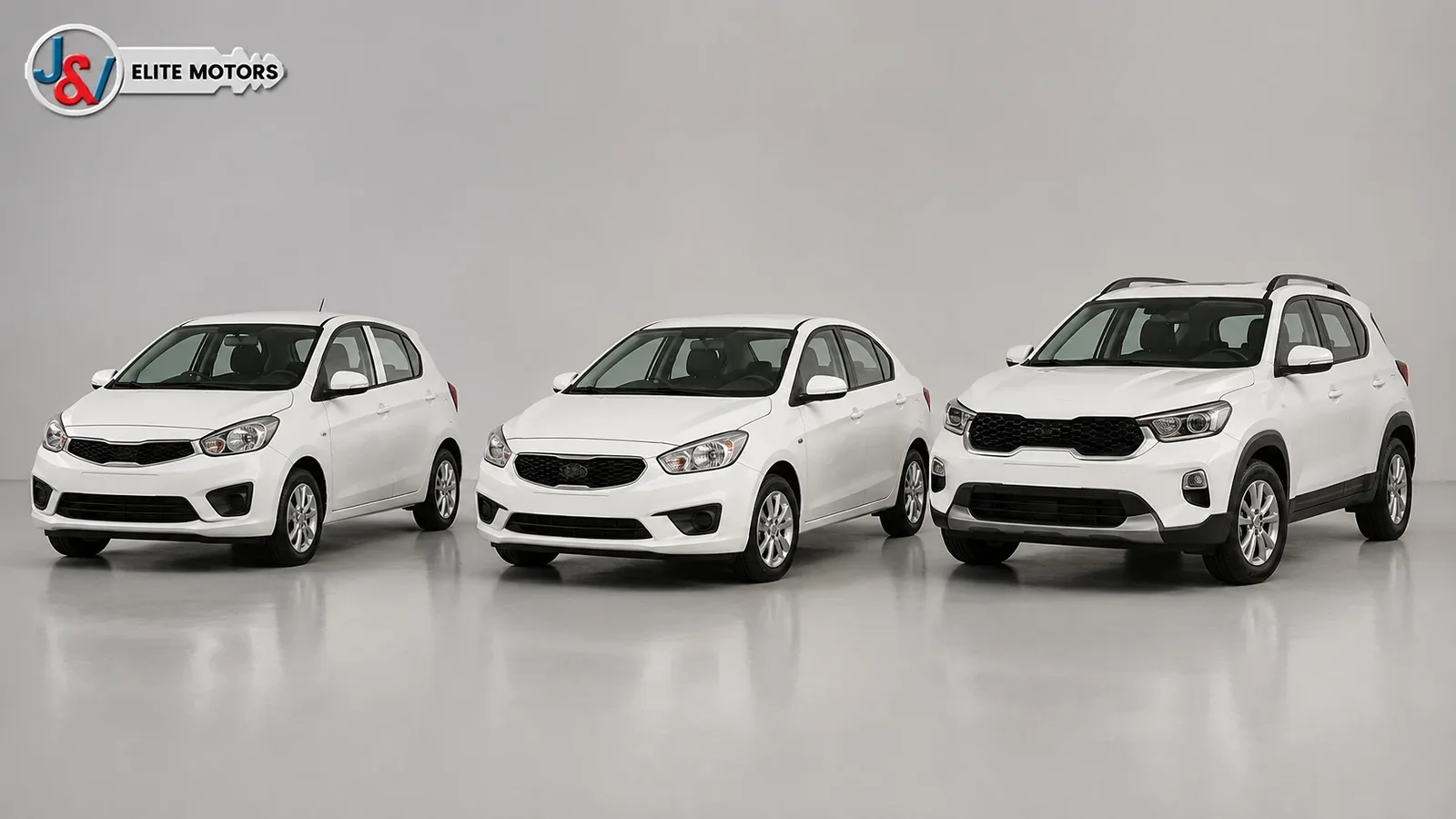
Yes. The i30 is the safest all-round choice under $20,000, particularly the 2017-onwards PD series with the 2.0-litre petrol engine and a conventional automatic.
The i30 is a small hatchback with a big boot, a comfortable ride and running costs that stay low. Two generations sit inside the budget.
The PD series, from 2017, is the better car. It earned a five-star ANCAP rating, came with Apple CarPlay and Android Auto as standard, and got Australian-tuned suspension. Expect to pay around $13,000 to $19,500 for a tidy Active or Go with average kilometres.
The older GD series, from 2012, starts near $9,900. It is still a solid car, but the cabin feels dated, and the safety kit is thinner.
Which i30 should you avoid? Skip the 1.6-litre diesel paired with the seven-speed dual-clutch transmission. A DCT is a gearbox that uses two clutches instead of a torque converter. Owners report shuddering at low speeds, hesitation from a standstill and clutch wear from around 80,000km. The diesel particulate filter (DPF) also clogs if the car only does short trips. If a diesel automatic shudders on the test drive, walk away.
Our full used Hyundai i30 buyer’s guide goes deeper on generations, best years and how many kilometres is too many. If you are torn between fuel types, compare used diesel vs petrol cars first, and manual vs automatic used cars if the gearbox is the sticking point.
From the yard: The i30s we knock back at appraisal are almost always diesel autos with a shudder the owner has learned to drive around. Ask the seller to leave the car cold and pull away gently from a standstill three times. If it hesitates or judders, it will not fix itself.
Is the Hyundai Tucson a good used family SUV?
Yes, the TL Tucson is the sensible family SUV under $20,000, but you must confirm two safety recalls have been done before you buy.
Most 2015 to 2019 examples land between $12,500 and $19,500. The 2.0-litre petrol front-wheel-drive Active and Active X are the common ones. They are not quick, but they are easy to live with and cheap to service.
Two recalls matter, and both are repaired free of charge.
ABS module fire risk. Cars sold from November 2014 to November 2020 were recalled because a circuit board in the anti-lock braking module could short-circuit when it got wet, creating a fire risk even with the car switched off.
Connecting rod bearing. More than 13,500 Tucsons built between 2014 and 2017 with the 2.0-litre petrol engine were recalled over a bearing defect that could damage the engine.
What to do: Run the VIN through the Australian Government’s vehicle recall database before you hand over money. If the work has not been done, a Hyundai dealer will do it at no charge.
Cross-shopping? Read our Kia Sportage vs Hyundai Tucson comparison, or widen the net with the best used family SUVs and 7-seaters in Australia.
Is the Hyundai Elantra better value than the i30?
The Elantra gives you a much bigger boot for about the same money, but you lose the hatch’s ability to fold the seats and carry bulky items.
The AD Elantra is essentially an i30 with a sedan body. Prices start near $12,000 for a 2016 Active and run to about $19,000 for a later one.
It rides quietly, the 2.0-litre engine is unstressed, and the back seat is roomier than the hatch. The SR turbo variant is fun but firmer over Melbourne’s patched suburban roads. Test drive one before you commit.
Is the Hyundai Accent a good first car?
Yes. The RB Accent is one of the cheapest ways into a reliable modern car, with later 2017 and 2018 Sport models sitting between about $7,600 and $15,400.
It is basic. The engine is a 1.6-litre petrol, the interior is plain, and pre-2015 cars miss modern driver aids. But it is small, cheap to insure, cheap to register and easy to park.
If the driver is on their probationary licence, check the Victorian safety requirements for probationary drivers before you buy, and lean towards the newest Accent your budget allows.
For more options in this bracket, see the best used cars under $15,000.
Should you buy an early Kona or a Venue?
Both are fine small SUVs, but the 2018 to 2020 Kona carries an engine recall you must check, while the Venue is simpler and lower-risk.
Early Kona OS models now dip below $20,000. Watch two things. A 2021 recall covered 2018 to 2020 Konas over defective piston oil rings that could cause stalling, oil leaks and engine damage. Early cars also drained the 12-volt battery when parked for several days.
The Venue is the smaller, simpler option from 2019. No all-wheel drive, no turbo, but genuinely easy to park and cheap to run. Good examples sit around $16,500 to $20,000.
Is the Hyundai iX35 worth buying now?
Only if the condition and service history are strong. From about $8,500, it is the cheapest way into a medium Hyundai SUV, but at that age you are buying the car, not the badge.
The LM iX35 is the Tucson’s predecessor. Budget for suspension bushes, tyres and a timing service if the seller cannot prove one has been done.
How do you check a used Hyundai before you buy?
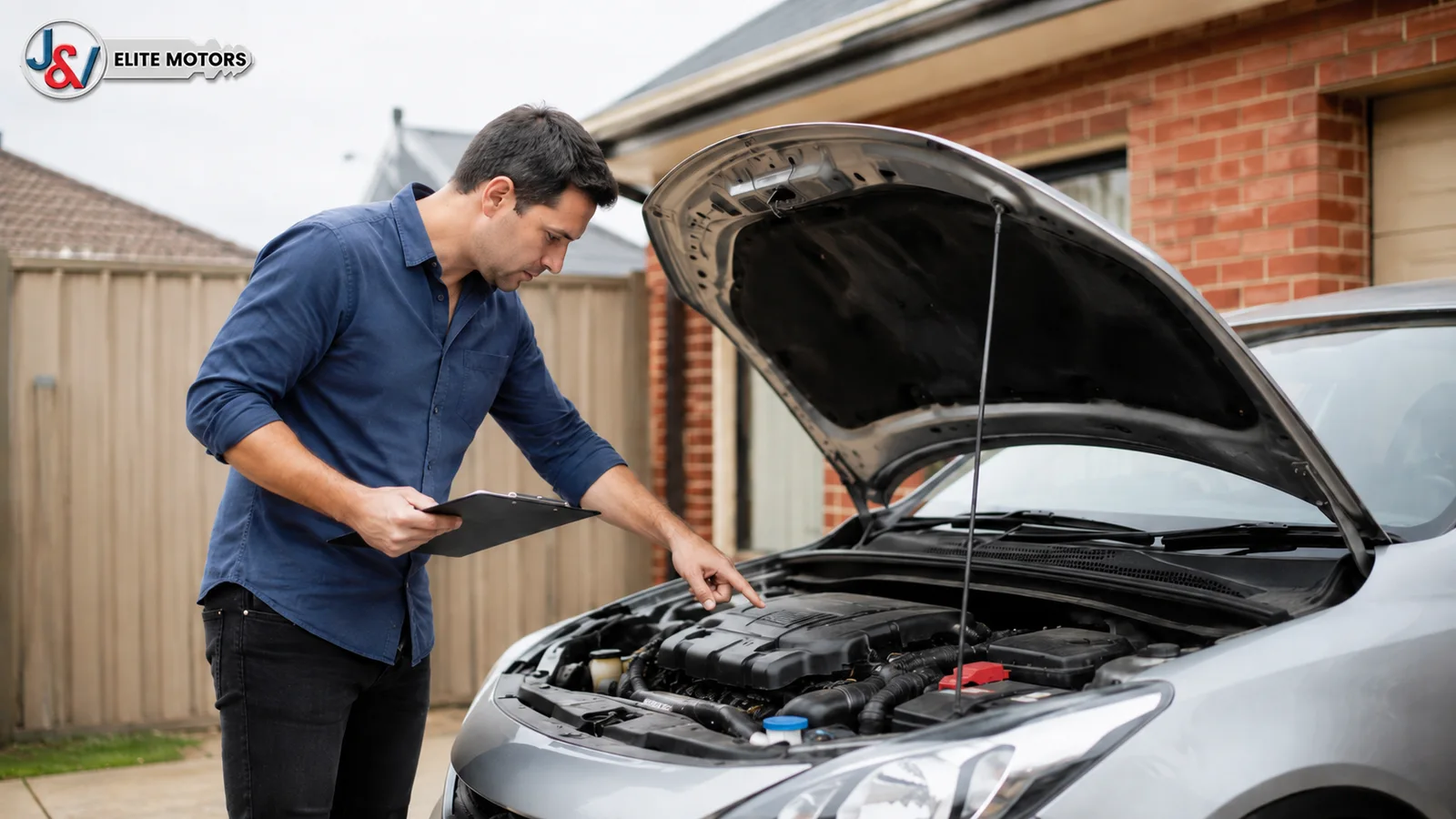
Work through seven checks in order: VIN recall search, PPSR certificate, logbook, cold start, gearbox test, rust and repair inspection, then an independent mechanical inspection.
It takes about an hour and can save you thousands.
Run the VIN through the government recall database. Free, instant, and it tells you if outstanding safety work is owed.
Buy a PPSR certificate. The Personal Property Securities Register confirms the car is not stolen, written off or carrying finance. It costs about $2 from the official PPSR site.
Check the logbook. Look for stamps at the right intervals, not just any stamps. Gaps of two years mean the oil sat in there for two years.
Cold-start it. Ask the seller not to warm the car up before you arrive. Rattles, smoke and rough idle show up on a cold engine.
Test the gearbox properly. Drive at 30 to 50km/h in traffic. Dual-clutch shudder shows up here, not on the freeway.
Check for rust and repair work. Look at panel gaps, boot floor and door seals. Mismatched paint means a repair.
Get an independent inspection. RACV and similar bodies do pre-purchase inspections. Roughly $250 well spent.
Our full used car buying checklist for Australians walks through every one of these in detail, and covers the paperwork you need. If you are buying in Victoria, also read what documents you need to buy a used car.
Test drive tip: Book your test drive for a cold morning if you can. Dual-clutch shudder, cold-start rattle and battery drain all reveal themselves before the engine warms up.
How much does a used Hyundai cost to run each year?
Budget roughly $3,850 to $5,950 a year for a used Hyundai in Victoria, covering servicing, registration, insurance, fuel and tyres.
Cost | Typical annual figure | Notes |
|---|---|---|
Servicing | $300 – $500 | Capped-price servicing applies to most models |
Registration (VIC) | $850 – $1,100 | Includes TAC charge; varies by postcode zone |
Comprehensive insurance | $700 – $1,400 | Higher for drivers under 25 |
Fuel | $1,800 – $2,600 | Based on 15,000km at current pump prices |
Tyres (amortised) | $200 – $350 | A set of four every three to four years |
Total | $3,850 – $5,950 | Small hatches sit at the low end |
Small hatches like the i30 and Accent sit at the bottom of that range. The Tucson and iX35 use more fuel and wear tyres faster because they are heavier.
If fuel is your main concern, compare the most fuel-efficient used cars in Australia.
Should you buy from a dealer or privately?
A licensed dealer gives you a statutory warranty, a roadworthy certificate, verified clear title and a three-business-day cooling-off period in Victoria. A private seller gives you none of those.
Buying privately is usually cheaper on sticker price. You get no statutory warranty, no cooling-off period and no recourse if something fails a week later. You also handle the roadworthy certificate and transfer paperwork yourself.
Buying from a licensed dealer in Victoria means the car comes with a roadworthy certificate, a clear title, and in most cases a statutory used-car warranty on eligible vehicles. You pay a little more for that protection.
Your protection | Licensed dealer | Private seller |
|---|---|---|
Statutory warranty | Yes, on eligible cars | No |
Cooling-off period | Yes, 3 business days in VIC | No |
Roadworthy certificate | Usually supplied | You arrange it |
Guaranteed clear title | Backed by the dealer | Verify yourself via PPSR |
If you are spending most of a $20,000 budget, the dealer route usually makes sense. A single unexpected transmission repair wipes out any private-sale savings.
Selling your current car too? Our trade-in vs private sale comparison shows what each option actually pays.
How do you finance a used Hyundai?
Most buyers at this price use a secured car loan, where the car itself is the security. That keeps the rate lower than an unsecured personal loan.
Three things decide your rate: your credit history, the age of the car, and the loan term. Lenders often charge more for cars over about ten years old, which is worth knowing if you are looking at an iX35 or an early GD i30.
Recommendation: Work out the total cost, not the weekly repayment. A longer term makes the weekly number look small while adding thousands in interest.
Our guide to how car finance works in Australia explains rates, deposits and novated leases, or you can get a finance estimate directly.
Hyundai buying terms explained
PD, GD, TL, AD, OS, RB, LM, QX — Hyundai’s internal codes for each model generation. Knowing the code tells you exactly which version a listing is describing.
DCT (dual-clutch transmission) — an automatic gearbox that uses two clutches instead of a torque converter. Quick and efficient, but can shudder at low speed.
DPF (diesel particulate filter) — a filter that traps soot in a diesel exhaust. It needs regular highway running to clear itself, so it clogs on short-trip cars.
ANCAP — the independent body that crash-tests and star-rates cars sold in Australia.
PPSR — the Personal Property Securities Register, the national database showing whether a car has money owing, is written off, or is stolen.
Statutory warranty — a used-car warranty that licensed dealers must provide by law on eligible cars. Private sales do not include one.
Ready to look at one?
We are a used car dealership at 21-23 Hammond Rd, Dandenong, and we serve buyers across Noble Park, Springvale, Keysborough and Mulgrave.
Browse our Hyundai stock, view all current listings, or get in touch to book a test drive.
Frequently Asked Questions
Is a used Hyundai i30 reliable?
Yes, particularly the 2017-onwards PD series with the 2.0-litre petrol engine and conventional automatic. It has a five-star ANCAP rating and a strong service record in Australia. Avoid the 1.6-litre diesel with the dual-clutch transmission unless it has a full service history and shows no shudder on a test drive.
What is the most reliable Hyundai model under $20,000?
The i30. It has the largest parts supply, the most independent mechanics who know it, and the fewest serious recall issues in petrol automatic form.
How many kilometres is too many on a used Hyundai?
There is no hard limit. A 150,000km car with a complete logbook is a better buy than an 80,000km car with no history. Expect around 15,000km per year as a guide, and treat anything far above that as a reason to inspect more closely, not to walk away automatically.
Do used Hyundais still have factory warranty?
Often, yes. The five-year unlimited-kilometre warranty runs from the date of first registration and transfers to subsequent owners. A car first registered in 2022 or later may still be covered.
Which used Hyundai is best for a first car?
The Accent for the tightest budgets, or an i30 if you can stretch. Both are cheap to insure and easy to park. Choose the newest example you can afford so you get more airbags and driver aids.
Are Hyundai parts expensive in Australia?
No. The brand’s sales volume here means genuine and aftermarket parts are widely available and competitively priced compared with European equivalents.
Should I worry about the Hyundai Tucson recalls?
Only if the work has not been done. Both the ABS module and connecting rod bearing recalls are repaired free of charge by Hyundai dealers. Check the VIN against the government recall register before you buy.
Is a used Hyundai SUV or hatch better value under $20,000?
A hatch gets you a newer car for the same money. A 2019 i30 costs about what a 2015 Tucson does. If you do not need the extra height and boot space, the hatch is the better value buy.