
Manual vs Automatic Used Cars: What’s the Better Buy?
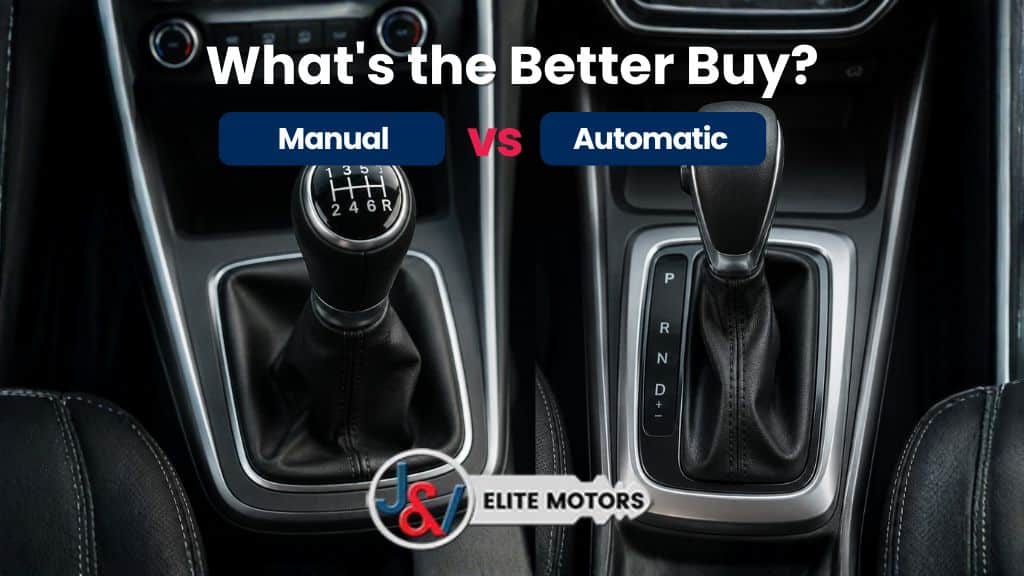
Manual vs automatic used cars compared on price, running costs, resale and reliability. See which is the better buy in Australia in 2026 — and what to check. For most Australian buyers in 2026, an automatic used car is the better buy; it’s easier to drive, holds its value better and suits our stop-start city traffic. A manual, though, can be the smarter choice when you want a lower purchase price, cheaper maintenance and more control behind the wheel. The right answer comes down to your licence, your budget, where you drive and how long you plan to keep the car. This guide compares both across price, running costs, resale, reliability and real-world use, so you can decide with confidence.
Manual vs automatic: a quick comparison
Before the detail, here’s how the two stack up on the factors that matter most when buying used:
Factor | Manual | Automatic |
|---|---|---|
Purchase price (used) | Usually cheaper for the same model | Often a small premium |
Resale demand (AU) | Niche — smaller buyer pool | Strong — most buyers want auto |
Maintenance | Fewer parts; clutch wears over time | Regular fluid service; costly if it fails |
Fuel economy | Often better on older models | Modern autos match or beat manuals |
Ease of driving | Steeper learning curve | Easiest, especially in traffic |
Licence (AU) | Needs a manual licence | Auto-only licence is fine |
Best for | Budget buyers, enthusiasts | Commuters, city driving, towing |
How manual and automatic transmissions work
A manual lets you choose the gears yourself using a clutch, while an automatic changes gears for you. That single difference drives everything else: cost, maintenance, fuel use and how the car feels to drive. It also helps to know that “automatic” now covers several distinct gearbox types, each with its own quirks on the used market.
Manual transmission
A manual (or “stick shift”) uses a driver-operated clutch and a gear stick. You press the clutch, select a gear and release; the engine and wheels connect through a clutch plate that wears down over time and eventually needs replacing. Manuals have fewer complex parts than autos, which is why they’re often cheaper to repair, but they take practice to drive smoothly.
Automatic (torque converter)
The traditional automatic uses a torque converter to shift gears without any input from you. It’s the smoothest option in stop-start traffic and the easiest to live with day to day. The trade-off is complexity: a worn torque converter or failed valve body can be expensive to fix, so a clean service history matters.
CVT (continuously variable transmission)
A CVT uses a belt-and-pulley system instead of fixed gears, giving seamless acceleration and strong fuel economy. You’ll find CVTs in many used Toyota, Honda, Nissan and Subaru models. They’re reliable when serviced properly, but a neglected CVT can be costly to replace, so check for the right fluid and service intervals.
Dual-clutch (DCT)
A dual-clutch transmission uses two clutches to deliver fast, sporty gear changes with good efficiency. The catch is that some used DCTs, particularly dry-clutch versions, can shudder or hesitate at low speeds. The Hyundai i30’s 7-speed dry DCT is a well-known example, so test drive any DCT carefully in slow traffic before you buy.
Semi-automatic and AMT
Semi-automatic and automated manual transmissions (AMT) combine manual mechanics with computer-controlled shifting. They’re less common in Australia and can feel jerky compared with a torque-converter auto, so weigh up the driving experience on a test drive.
Which is cheaper to buy used?
Manuals are usually cheaper to buy than the same model in automatic. Because most Australians want an automatic, demand for used manuals is lower and lower demand means sharper prices. If you can drive a manual, you can often pick up a better-equipped or lower-kilometre car for the same money. The saving is biggest on enthusiast models and everyday hatchbacks, and smallest on cars rarely sold as manuals, such as large SUVs and utes with premium trims.
Which costs less to maintain and run?
Manuals are generally cheaper to maintain, but a worn clutch is the main expense to budget for. Automatics avoid the clutch, yet their fluid services and potential repairs can cost more if something goes wrong. Here’s how the two compare on the costs you’ll actually face.
Servicing and repairs
A manual has fewer moving parts, so routine servicing is usually straightforward. The big-ticket item is the clutch, which wears with use and driving style. In Australia in 2026, a clutch replacement typically costs around $800 to $1,500 for a small car or sedan, rising to $1,500 to $2,500 or more for SUVs, performance cars and luxury models.
An automatic has no clutch to replace, but it needs regular fluid servicing generally every 20,000 to 40,000 km, and more often for hard city use or towing. A transmission fluid change runs about $150 to $250, and a flush around $300 to $500. The risk is a major fault: rebuilding or replacing an automatic can cost anywhere from $1,000 to $5,000 or more. That’s why a documented service history is worth paying extra for on any used auto.
Fuel economy
On older cars, manuals often used slightly less fuel because the driver controlled the gears directly. On modern used cars, that advantage has largely closed today; CVTs and dual-clutch boxes have more gears and smarter software, so many now match or beat an equivalent manual. Check the official combined figure on the specific model and year rather than assuming the manual wins.
Which holds its value better in Australia?
Automatics hold their value better in Australia because they’re what most buyers want. Fewer than 4% of new cars sold here now have a manual, and only around 5% of used listings are manual. When you sell, an automatic appeals to almost everyone, while a manual narrows your buyer pool to learners on a manual licence, enthusiasts and budget hunters. The exception is desirable enthusiast and performance cars, where a manual can actually command a premium and hold value strongly.
If resale matters to you, it’s worth comparing what’s selling now; you can browse our current used cars to see which automatics and manuals hold their value in your budget.
Can I drive a manual on an automatic licence?
No, in Australia, if you hold an automatic-only licence, you cannot legally drive a manual car. An automatic-condition licence restricts you to autos until you pass a driving test in a manual to have the condition removed. This is a practical reason many learners and younger buyers choose an automatic: it keeps their options open without an extra test. If you learned in and were tested in a manual, you can drive both.
Which is more reliable?
A well-maintained manual is mechanically simpler and can be more reliable over the long run, but a properly serviced automatic is dependable too. Reliability depends far more on servicing and the specific model than on the transmission type alone. Manuals have fewer parts that can fail, and the clutch is a known, repairable wear item. Automatics are more complex, so neglected fluid changes or a known weak gearbox can lead to bigger bills. The takeaway: buy on service history and condition first, transmission type second.
Which suits your situation best?
The “better buy” changes with how and where you drive. Match the transmission to your real-world needs:
City commuting and heavy traffic: an automatic is far less tiring in stop-start conditions and is the easier daily choice.
First car or learner: an automatic is simpler to learn and keeps the focus on the road; a manual builds car control and is cheaper to buy.
Towing, utes and 4x4s: an automatic is generally preferred for heavy towing and hill starts, and resale on auto utes and SUVs is strong.
Enthusiast and weekend driving: a manual gives more control and engagement, and a desirable manual can hold its value well.
Transmission is just one piece of the puzzle. For the full process, read our guide on how to choose the right used car.
What to check when buying a used manual or automatic
Always take a thorough test drive and, ideally, get an independent pre-purchase inspection. Transmission faults are among the most expensive to fix, so a quick check now can save you thousands. Here’s what to focus on for each type.
Buying a used manual
Clutch bite point: if it engages very high near the top of the pedal travel, the clutch may be worn and due for replacement.
Clutch slip: in a high gear at low revs, accelerate firmly if revs climb without matching speed, the clutch is slipping.
Gear changes: each gear should select cleanly without crunching, grinding or popping out of gear.
Heavy or notchy shifts and clutch judder on take-off can point to wear or a tired gearbox.
Buying a used automatic
Smooth shifts: changes should be smooth and timely, not jerky, delayed or harsh under light acceleration.
Slipping or flaring: rising revs without a matching change in speed suggests internal wear.
DCT low-speed shudder: in a dual-clutch car, watch for shuddering or hesitation when crawling in traffic.
Fluid and history: ask for proof of transmission servicing; burnt-smelling or dark fluid is a warning sign.
Not confident checking a car yourself? Our used car buyer’s guide explains how a pre-purchase inspection works and what it should cover.
Is it worth buying a manual car in 2026?
Yes, a manual can be well worth it in 2026 if you can drive one and want to save money, but for most buyers an automatic is the safer all-round choice. Manuals are now a small slice of the market, which keeps used prices low and makes them a bargain for confident drivers and enthusiasts. The downsides are a smaller resale pool and the fact that fewer learners can drive them. If you value ease, resale and broad appeal, buy the automatic. If you value purchase price, lower maintenance and driver engagement, and you hold a manual licence, a manual still makes a lot of sense.
Still deciding between the two? Get in touch with our Dandenong team, and we’ll help you match the right car and the right transmission to how you drive.
Related guides and next steps
If you’re weighing up a used car more broadly, these resources help with the decisions that sit alongside transmission choice:
How to Choose the Right Used Car: A Buyer’s Guide for Australians is the complete used-buying checklist.
Browse our used Hyundai range, including the i30 and its dual-clutch transmission.
See all used cars in stock in manual and automatic, or apply for finance.
Also comparing fuel types? Read our guide to used diesel vs petrol cars in 2026 before you buy.
Frequently Asked Questions
Is it better to buy a manual or automatic used car?
For most Australian buyers, an automatic is the better buy thanks to ease of driving and stronger resale. A manual is better if you want a lower purchase price, cheaper maintenance and more control, and you hold a manual licence.
Are manual cars cheaper to buy and maintain?
Usually, yes. Manuals tend to cost less to buy because demand is lower, and they’re often cheaper to maintain since they have fewer complex parts. The main cost to plan for is an eventual clutch replacement, typically $800 to $2,500 depending on the car.
Do automatic cars have better resale value in Australia?
Generally, yes. With fewer than 4% of new cars sold as manuals, automatics appeal to far more buyers, so they’re easier to sell and hold value better. Desirable enthusiast manuals are the main exception.
Can I drive a manual car on an automatic licence?
No. An automatic-only licence in Australia restricts you to automatic cars. You must pass a driving test in a manual to remove the condition before you can legally drive one.
Which is more reliable, manual or automatic?
A well-serviced manual is mechanically simpler and can be very reliable, but a properly maintained automatic is dependable too. Service history and the specific model matter more than transmission type.
Is manual or automatic better for fuel economy?
Older manuals often used slightly less fuel, but modern automatics, CVTs and dual-clutch gearboxes have closed the gap and frequently match or beat manuals. Check the combined figure for the exact model and year.
What is the difference between CVT, DCT and a regular automatic?
A regular automatic uses a torque converter, a CVT uses a belt-and-pulley system for seamless acceleration, and a DCT uses two clutches for fast, sporty shifts. Each behaves differently, so test drive the specific type you’re considering.
Is it worth buying a manual car in 2026?
Yes, if you can drive one and want to save money, low demand keeps used manual prices attractive. For broad appeal, easy daily driving and resale, an automatic remains the safer choice.
What should I check when buying a used automatic car?
Look for smooth, timely gear changes, no slipping or flaring, no low-speed shudder in dual-clutch cars, and proof of regular transmission servicing. An independent pre-purchase inspection is strongly recommended.