
Kia Sportage vs Hyundai Tucson: Which Used SUV Should You Buy?
Quick answer
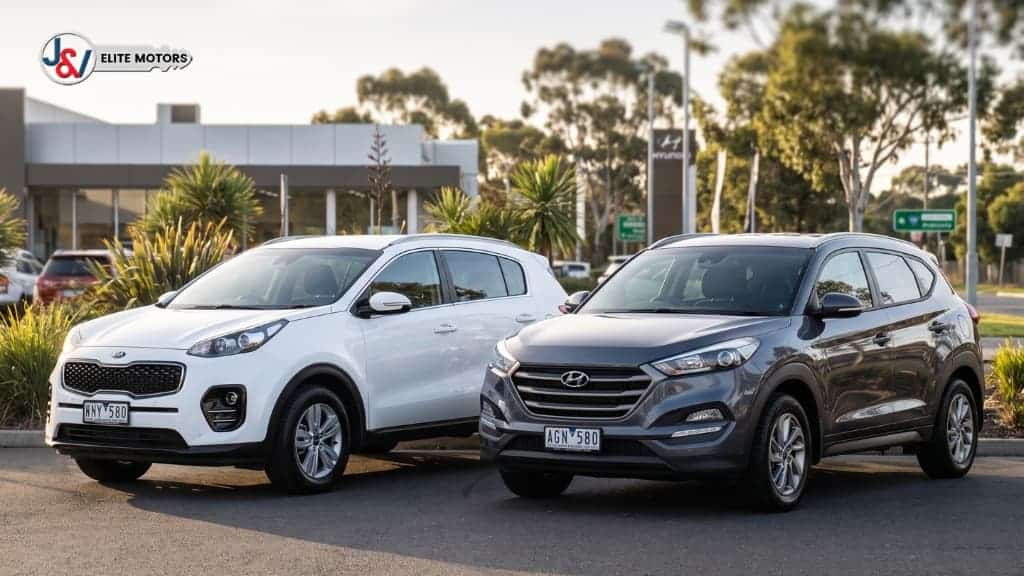
The Kia Sportage and Hyundai Tucson are closely related used medium SUVs that share engines, parts and platforms. The Sportage wins on warranty (7 years vs 5) and locally tuned handling. The Tucson feels a touch roomier and softer to drive. Prices are almost line-ball, so condition and service history should decide your choice.
Shared engineering: same platforms, engines and much of the equipment
Warranty when new: Kia 7 years vs Hyundai 5 years, both unlimited km
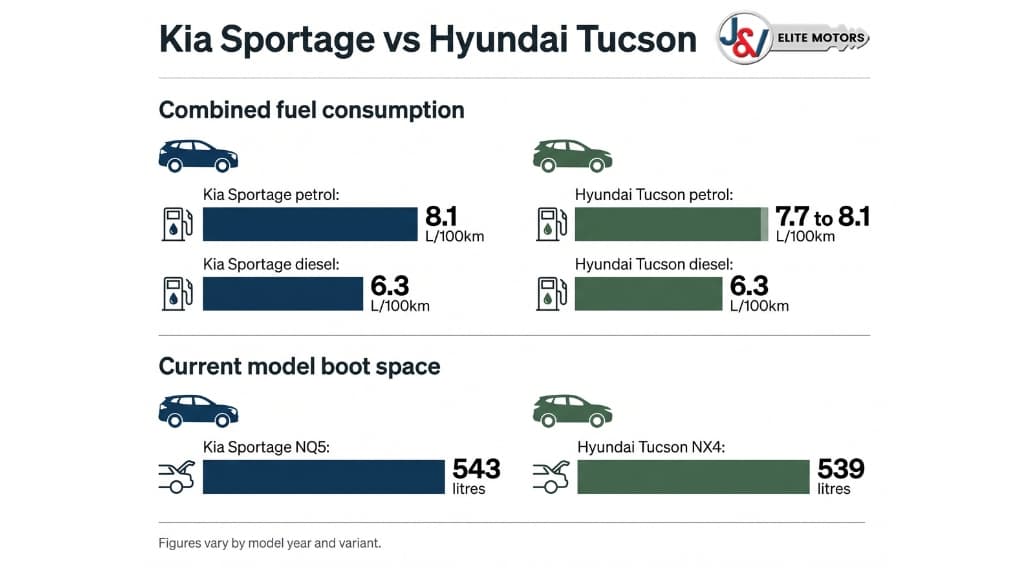
Fuel use: diesels about 6.3 L/100km, petrols about 7.7 to 8.1 L/100km
Boot space: current models about 539 to 543 litres
Safety: recent generations of both hold a 5-star ANCAP rating
Choosing between a used Kia Sportage and a Hyundai Tucson is one of the most common questions medium-SUV buyers ask. The two come from sister brands, so they share a lot underneath. This guide compares reliability, running costs, space, safety and value using current Australian data, so you can buy with confidence. For a step-by-step inspection walk-through, see our used car buying checklist.
Key differences at a glance
Key differences
Warranty: Kia offers 7 years / unlimited km when new; Hyundai offers 5 years / unlimited km.
Handling: Kia tunes suspension locally, so the Sportage often feels steadier; the Tucson rides softer.
Space: current Tucson (NX4) boot is about 539 L; current Sportage (NQ5) about 543 L.
Fuel tank: Tucson holds 62 L, Sportage 54 L, so the Tucson can go further between fills.
Price: used values are almost line-ball; pick the best-kept car, not the badge.
Are the Kia Sportage and Hyundai Tucson the same car?
No, but they are close cousins. Kia and Hyundai are sister brands, so the Sportage and Tucson share platforms, engines and much of their equipment. Prices sit almost in line with each other across the range. The real differences come down to styling, cabin layout, feature levels and how each one drives.
What they share
Both use the same core engineering and powertrains. You will find similar petrol, diesel and, on newer models, hybrid options. Parts, servicing networks and warranty structures are alike, which keeps both easy and affordable to own.
Where they differ
Kia tunes its suspension locally for Australian roads. Many drivers find the Sportage feels more settled over bumps and steadier in corners. The Tucson rides a touch softer and leans towards comfort. Styling and interior design differ too, so it is worth sitting in both.
Tip
Always match the vehicle identification number (VIN) on the paperwork to the VIN stamped on the car. This confirms you are looking at the right car’s history.
Which used SUV is more reliable?
Both are reliable, and service history matters more than the badge. A well-maintained Sportage or Tucson should give years of dependable use. A neglected example of either can cost you, so the logbook is your best guide.
Common things to check on a used Sportage
Check the service book for on-time servicing. On diesel models, ask about the type of driving. Diesel particulate filter (DPF) and EGR problems appear more often on short city trips. On turbo-petrol and dual-clutch models, feel for any judder or hesitation when moving off.
Common things to check on a used Tucson
The Tucson shares many of the same points. Confirm regular oil changes, especially on turbo engines. Listen for rough gear changes on dual-clutch versions. Check for warning lights, uneven panel gaps and signs of past accident repairs.
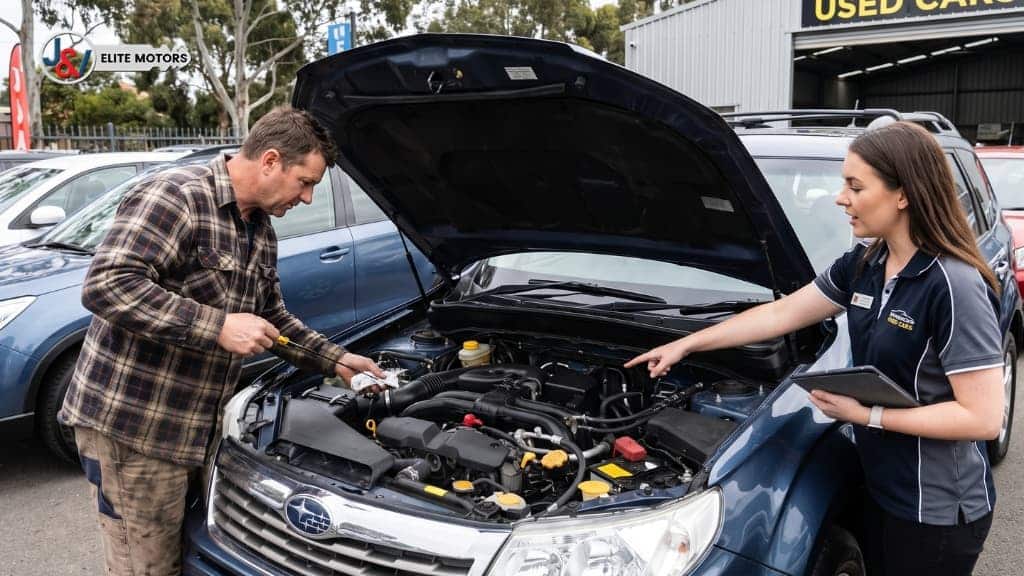
A pre-purchase inspection is money well spent. Our used car buying checklist walks you through every step.
 Tip
Tip
Diesel suits long, regular highway trips. If the car mostly did short suburban runs, a petrol or hybrid version is often the safer used buy.
How do the Sportage and Tucson compare on running costs?
Running costs are very close, with fuel and servicing almost matched. Diesels use about 6.3 L/100km and petrols about 7.7 to 8.1 L/100km. Hyundai servicing runs roughly $1,800 to $2,040 over five years, and Kia is broadly similar with a longer 7-year capped-price plan.
Specifications and running costs at a glance
Feature | Kia Sportage | Hyundai Tucson |
|---|---|---|
Body style | Medium SUV, 5 seats | Medium SUV, 5 seats |
Petrol economy (combined) | About 8.1 L/100km (2.0L) | About 7.7–8.1 L/100km |
Diesel economy (combined) | About 6.3 L/100km (2.0 CRDi) | About 6.3 L/100km (2.0 CRDi) |
Boot space | 466 L (QL) / 543 L (NQ5) | 488 L (TL) / 539 L (NX4) |
Fuel tank | 54 L | 62 L |
New-car warranty | 7 years / unlimited km | 5 years / unlimited km |
Servicing (5 yrs, approx.) | Capped-price, ~$1,800 | ~$1,800–$2,040 |
ANCAP (recent gen) | 5 stars | 5 stars |
Figures are indicative and vary by model year and variant. Confirm the exact specs for the car you are viewing. Sources: manufacturer specs, ANCAP, CarsGuide, Green Vehicle Guide (July 2026).
How much do used Sportage and Tucson models cost?
Expect roughly $17,000 for a 2018 model and $22,000 to $34,000 for a 2021. Prices are almost line-ball between the two, so shop on condition and history rather than badge. The figures below reflect Australian dealer listings in mid-2026.
Model year | Kia Sportage (approx.) | Hyundai Tucson (approx.) |
|---|---|---|
2018 | $17,000–$23,000 | $17,000–$20,000 |
2021 | $22,000–$34,000 | $25,000+ |
Indicative used listings, July 2026. Actual prices vary by variant, drivetrain, kilometres, condition and location.
Browse our current used Kia Sportage and used Hyundai Tucson listings to compare live prices.
How much space and comfort do you get?
Both seat five with a big boot; the current models are near-identical inside. The Sportage NQ5 offers about 543 litres and the Tucson NX4 about 539 litres. Older QL and TL generations hold a little less, around 466 to 488 litres.
Boot and cabin space
Rear-seat room is good in both, and newer models feel roomier. Check the child seat anchor points if you have young kids. Fold the rear seats to see the full load space for prams, sports gear or luggage.
Technology and features
Feature levels rise with model year and trim. Look for Apple CarPlay and Android Auto, a reversing camera and driver-assist features. From about 2019, many variants added autonomous emergency braking (AEB) and lane-keep assist as standard.
How safe are the Sportage and Tucson?
Both earn 5 stars from ANCAP in their recent generations. The 2021 Tucson scored 86% for adult occupant protection and 87% for child occupant protection. Always check the ANCAP result for the exact model year you are considering.
Key safety features to look for
Look for AEB, lane-keep assist, blind-spot monitoring and rear cross-traffic alert. Higher trims add more. Older examples may have fewer aids, so weigh the safety kit against price. A newer base model can be safer than an older top-spec car.
Which model years and mileage are the sweet spot?
A 2019–2021 model with full service history is the value sweet spot. Newer generations bring better safety and tech, and may keep some factory warranty. Fair kilometres depend on age and service history, not a single magic number.
Best Sportage years
The QL series (2015–2021) is affordable and widely available. The NQ5 (2021 on) adds space, tech and a bolder design. For the remaining warranty, a newer NQ5 makes sense. For value, a well-kept later QL is hard to beat.
Best Tucson years
The TL generation (2015–2021) offers solid value. The NX4 (from April 2021) brought a big leap in design, space and safety. As with the Sportage, a newer model keeps more warranty; an older one saves money upfront.
Tip — Victoria
In Victoria, a used car sold by a licensed dealer must come with a roadworthy certificate. Private sellers usually don’t have to supply one, so budget for your own checks. See our Victorian roadworthy guide for details.
Buying from a dealer vs a private seller
A dealer gives you more protection; a private sale can be cheaper but riskier. Licensed dealers must meet consumer guarantees and, in Victoria, supply a roadworthy certificate. Private sales are usually buyer beware.
What you get | Licensed dealer | Private seller |
|---|---|---|
Roadworthy certificate | Provided by dealer | Often not supplied |
Consumer guarantees | Apply | Limited |
Statutory warranty | May apply (conditions) | Not offered |
Finance and trade-in | Usually available | Not available |
PPSR check | Often handled for you | Do it yourself |
Price | Sometimes higher | Sometimes lower |
Need help paying for your SUV? See our car finance options, or trade in your current car.
Our verdict: Which should you buy?
Buy the best-kept car you can afford, but here is how they split by need. Both are excellent used medium SUVs, so the decision is rarely wrong.
Verdict by buyer type
Want the longest warranty and sharpest handling: choose the Kia Sportage.
Want the softest ride and a slightly bigger fuel range: choose the Hyundai Tucson.
Doing lots of highway kilometres: pick a well-serviced diesel in either badge.
Mostly short city trips: pick a petrol or hybrid to avoid diesel DPF issues.
On the tightest budget: a later QL Sportage or TL Tucson gives the most car per dollar.
At J & V Elite Motors in Dandenong, our team can help you compare well-checked used SUVs side by side, so you drive away sure of your choice.
Frequently Asked Questions
Is the Kia Sportage or the Hyundai Tucson more reliable?
Both are reliable medium SUVs. On a used car, service history and condition matter more than the badge. A well-maintained example of either should give years of dependable use, so check the logbook carefully.
Are the Kia Sportage and Hyundai Tucson the same car?
They are built by sister brands and share platforms, engines and many parts. Each brand fits its own styling, cabin design and feature levels, and Kia tunes its suspension locally for Australian roads.
Which is cheaper to run, a Sportage or a Tucson?
Running costs are very close. Diesels use about 6.3 L/100km and petrols about 7.7 to 8.1 L/100km. Servicing sits around $350 to $410 a year, and Kia’s longer 7-year warranty can save on repair bills.
Does a used Sportage or Tucson still have a warranty?
It often does. Kia’s new-car warranty runs seven years and Hyundai’s runs five, both with unlimited kilometres. A car only a few years old may still be covered, so check the build date and terms.
Which used SUV has more boot space?
They are close. The current Kia Sportage (NQ5) offers about 543 litres and the current Hyundai Tucson (NX4) about 539 litres. Older models hold a little less, around 466 to 488 litres.
How many kilometres is too many for a used Sportage or Tucson?
There is no single limit. A well-serviced car with 120,000 km can be a better buy than a neglected one with 60,000 km. Prioritise a full service history over a low odometer reading.
What ANCAP safety rating do the Sportage and Tucson have?
Recent generations of both earned a 5-star ANCAP rating. The 2021 Tucson scored 86% for adult occupant protection and 87% for child occupant protection. Always confirm the rating for the exact model year.
Should I buy a used SUV from a dealer or a private seller in Victoria?
A licensed dealer must supply a roadworthy certificate and meet consumer guarantees. Private sales are usually buyer beware, so you arrange your own roadworthy and PPSR check.