
PPSR Checks Explained: How to Avoid Buying a Written-Off Car
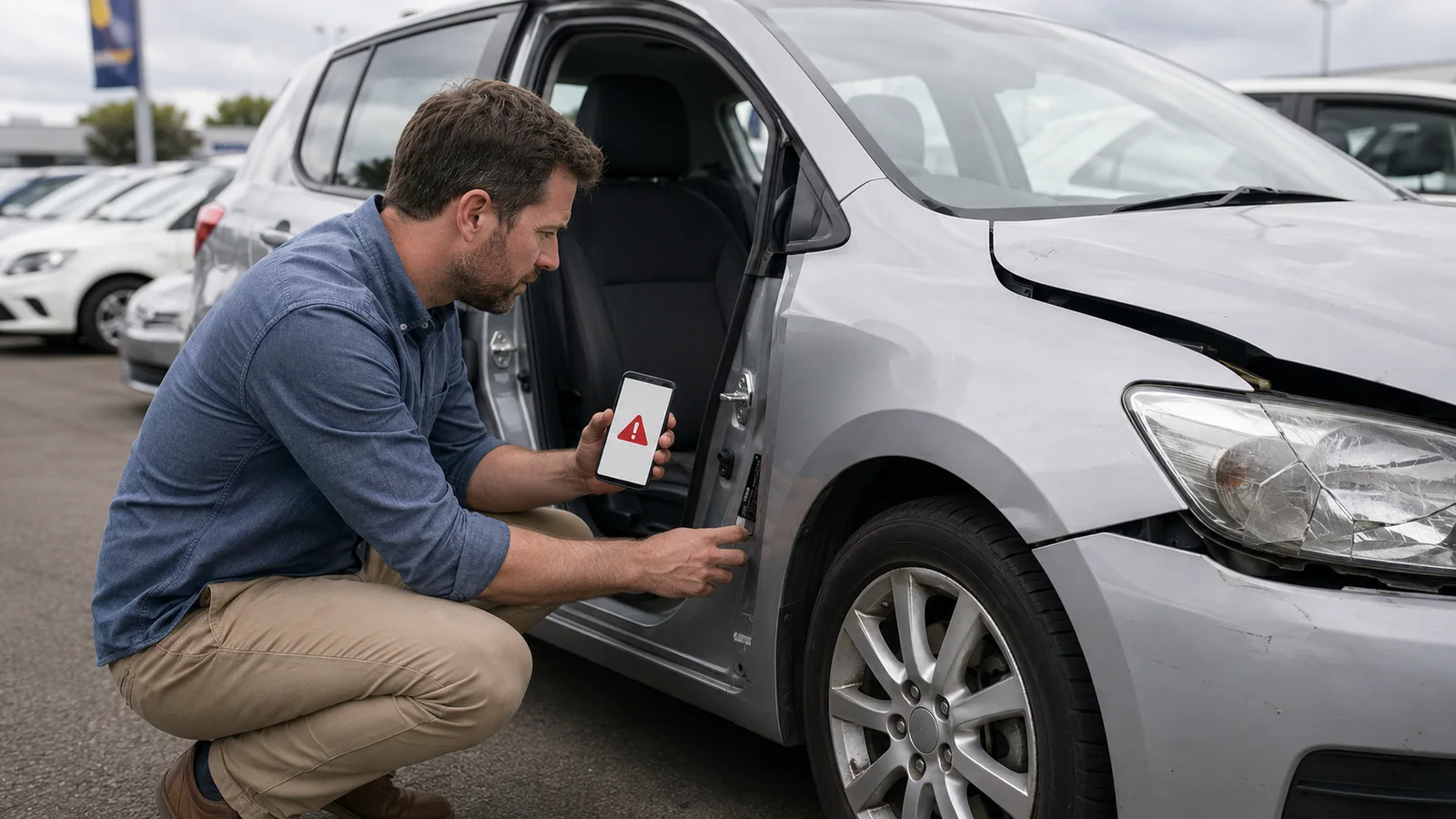
What is a PPSR check, and what does it tell you?
A written-off car check is part of a $2 PPSR search, a search of the Australian Government’s Personal Property Securities Register using a car’s VIN. It tells you whether the car is listed as written off, whether it is recorded as stolen, and whether money is still owing on it. You get a legal search certificate by email within minutes. Always run one before you pay a private seller.
It is one step in a bigger process. See our used car buying checklist for everything else worth doing before you pay.
Key takeaways
- A PPSR search costs $2.00 online at ppsr.gov.au (or $7.00 by phone). There is no GST, and the certificate is free.
- You need the VIN or chassis number. You cannot search by number plate or engine number.
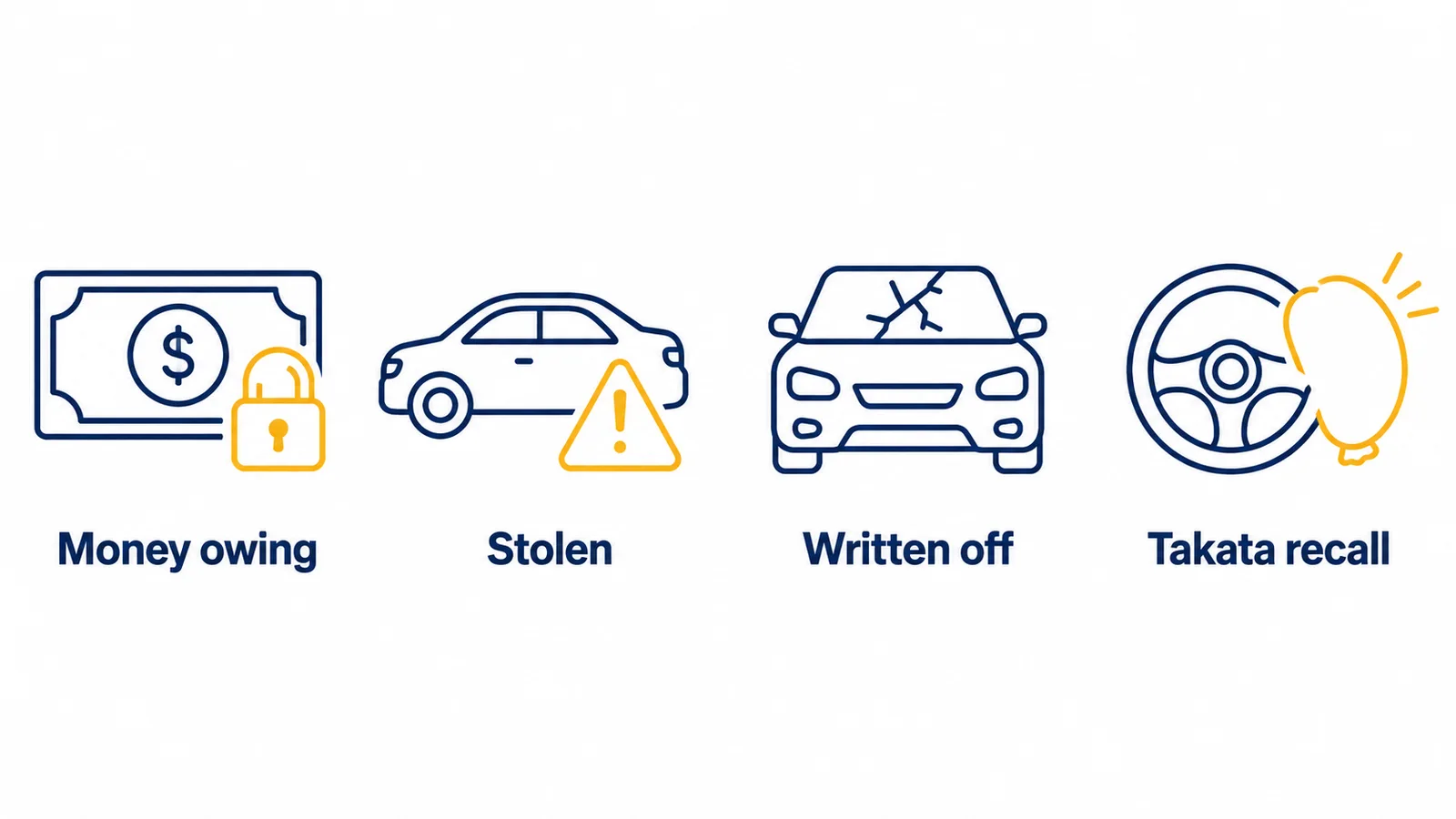
- The search shows finance owing, stolen status, written-off status and Takata airbag recall status.
- Search on the day you buy or the day before. Timing is what gives you legal protection.
- A statutory write-off written off after 1 May 2002 can never be registered again in Victoria.
- A repairable write-off can go back on the road, but only after a Vehicle Identity Validation (VIV) inspection and a roadworthy certificate.
- If you buy from a licensed motor car trader, you are generally protected from repossession. Private sales carry the real risk.
Why does a written-off car matter so much?
Because a written-off car carries a permanent record that follows it for life, and in the worst case it can never be legally registered again.
An insurer writes a car off when the cost to repair it is more than the car is worth, or when the damage is so severe the car would not be safe to drive. Once that happens, the car is added to the Written-Off Vehicles Register (WOVR). In Victoria, the WOVR covers light vehicles up to 4.5 tonnes and motorcycles under 15 years old.
That record never goes away. Even after the car is repaired, re-registered and looking showroom-fresh, the write-off flag stays on the register and shows up on every PPSR search from then on. It affects what you can sell the car for, what an insurer will pay out, and in some cases whether you can insure it at all.
The harder problem is the cars where the seller does not mention it. A skilfully repaired flood or hail car can look fine on a Saturday morning inspection. The register does not care how good the paintwork is.
What do the different write-off types actually mean?
Victoria records three write-off types on the WOVR: repairable write-off, inspected write-off and statutory write-off, and only one of them can never go back on the road.
Here is the difference in plain terms.
| Write-off type | What it means | Can it be registered again? | What you should do |
|---|---|---|---|
| Repairable write-off (RWO) | Damaged badly enough to be uneconomical to repair, but structurally repairable | Yes, after a VIV inspection and a roadworthy certificate | Proceed only with full repair receipts and an independent inspection |
| Inspected write-off (IWO) | A repairable write-off that has already passed a Vehicle Identity Validation inspection | Yes, it has already cleared the identity check | Still get an independent mechanical inspection |
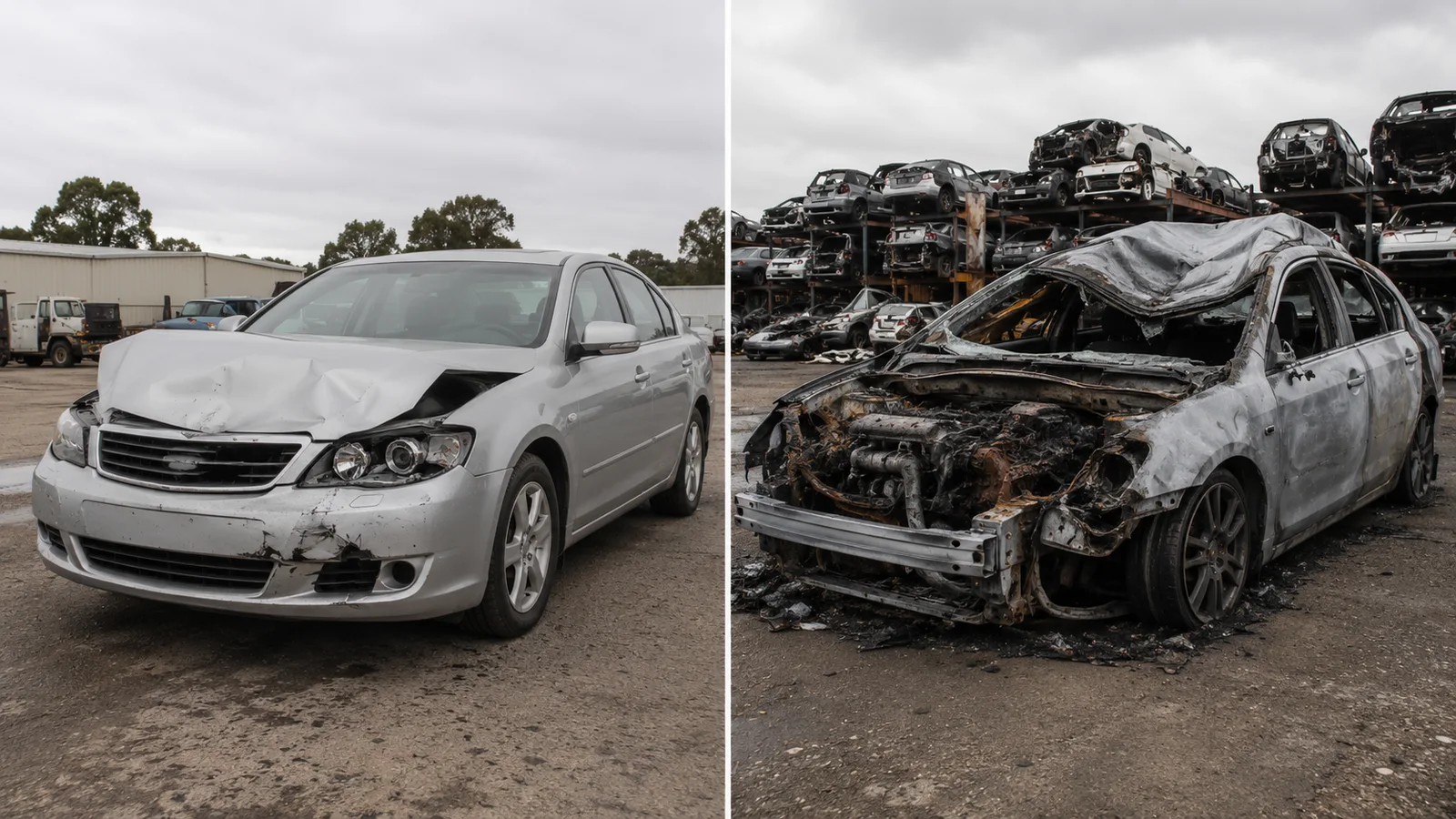
| Statutory write-off (SWO) | Severe damage from major fire, flood or structural destruction | No. If written off after 1 May 2002, never again | Walk away. It is parts and scrap only. |
The one that catches people out is the statutory write-off. Sellers occasionally advertise these as “rebuilt” or “repaired and driving well”. In Victoria, it does not matter how well it drives. It cannot be registered, so you cannot legally use it on the road.
Important
A statutory write-off written off after 1 May 2002 can never be registered in Victoria. It can only be used for parts or recycling. No amount of repair work changes this.
How do you run a PPSR check, step by step?
Find the car’s VIN, go to ppsr.gov.au, pay $2 with a card, and the certificate lands in your inbox within minutes.
Find the VIN. Most cars built after 1989 have a 17-character VIN. Look at the bottom of the windscreen from outside, in the driver’s door jamb, in the engine bay, or on the registration papers. Cars built before 1989 will usually have a chassis number instead.
Check that the VIN matches. Compare the VIN on the car itself with the VIN on the registration papers and the seller’s advertisement. If they do not match, stop there.
Go to the official site. Use ppsr.gov.au. Third-party services resell the same government data with extras bundled on top, often for $20 or more. The government search is $2.
Choose the motor vehicle search and enter the VIN or chassis number. You cannot search using a number plate or an engine number.
Pay $2 by credit or debit card. Fees are non-refundable, so check the VIN carefully before you submit. One wrong character and you have paid for a search on a different car.
Read the certificate. It arrives by email, along with a receipt and a motor vehicle fact sheet. Save it. It is a legal record.
Tip
Take a photo of the VIN plate while you are at the car. It saves a second trip if you decide to run the search later that evening.
How do you read your PPSR search certificate?
Look at two sections of the certificate: “PPSR Registration Details” for money owing, and the NEVDIS section for written-off and stolen status.
Money owing on the car
If the certificate says there is no security interest registered against the VIN, no one has a registered claim over the car. That is what you want to see.
If a PPSR registration does appear, someone, usually a bank or finance company, has registered a security interest. That means they may have the right to repossess the car even after you have paid the seller. Ask the seller to have the registration removed before you go any further. If you want the background on why these get registered in the first place, our guide to how car finance works in Australia explains it.
How to check if a car is written off or stolen
Under the NEVDIS heading, you will see one of:
Not recorded as written off: no write-off record found.
Statutory write-off: the car is not safe to drive and cannot be re-registered.
Repairable write-off: it may be repaired, re-inspected and registered.
The same section shows stolen status. Any stolen vehicle indicator against the engine, vehicle or plate means you should contact Victoria Police before doing anything else.
You may also get a written-off damage code, which describes the type of damage. Hail is very different from a structural front-end impact, and the code tells you which you are dealing with.
What a PPSR search does not tell you
This part matters, because people over-trust the certificate. A PPSR search does not show:
how much finance is owing (only that a security interest exists)
who owns the car or its ownership history
the odometer reading or whether it has been wound back
outstanding fines
the quality of any repairs
That is why a PPSR check is one step, not the whole job. You still need a mechanical inspection and a rego check.
When should you run the check to actually be protected?
On the day you buy, or the day before. The closer to handover, the stronger your protection.
This is the part most buyers get wrong. They run a search when they first see the car, then buy it three weeks later. In those three weeks, a finance company can register a new security interest, and the old certificate does not protect them.
If your search certificate shows a clear result and is dated the day of purchase or the day before, it becomes evidence that you bought in good faith. If a lender later comes looking for the car, that certificate is what you show them.
The certificate also records the exact timestamp of the search. That timestamp is the whole point.
Important
A PPSR certificate is only as useful as its date. Re-run the $2 search on the morning of the sale, even if you searched two weeks earlier.
Are you safer buying from a dealer than a private seller?
Yes. If you buy from a licensed motor car trader, you are generally protected from repossession even if a security interest was registered against the car.
That protection is the practical difference between the two. In a private sale, if the seller still owes money on the car, the lender can come after the vehicle, and you can lose both the car and what you paid for it. From a licensed dealer, the law shields you.
Licensed motor car traders in Victoria also carry reporting obligations. An LMCT must report a vehicle to the WOVR within seven days of acquiring it and before disposing of it, if an insurer has not already done so. And a seller, whether a dealer or a private seller, must tell you if a car has been written off, whether you ask or not. Transport Victoria sets out the full buyer’s checklist for written-off vehicles.
If you are on the other side of the transaction and weighing up how to sell, our comparison of trade-in versus private sale covers the same risks from the seller’s point of view.
From The Yard
At J & V Elite Motors, we PPSR-check every car before it comes onto our lot at Hammond Road, and again as part of preparing it for sale. We do it because a car with a surprise on the register is a car we cannot stand behind. If you are looking at something privately and you are unsure what the certificate is telling you, ring us on (03) 9706 8999, and we will read it with you. No obligation.
What other checks should you do alongside a PPSR search?
A PPSR check covers finance, theft and write-off status. Three other checks cover everything it misses.
Work through the full used car buying checklist as well, and make sure you have the right documents ready for a Victorian purchase before handover day.
Registration check
Use the VicRoads vehicle registration enquiry to confirm the rego status, expiry date and that the make and model match the car in front of you. Cross-check the plate and VIN against the PPSR certificate.
Independent mechanical inspection
Have an independent inspector look at the car, not someone the seller recommends. Ask them specifically to check that the VIN and compliance plates have not been tampered with, and that service book odometer readings run consistently.
WOVR extract (Victoria)
If you want the full write-off picture, you can request a WOVR extract from VicRoads showing the date and type of write-off plus damage codes. Call VicRoads on 13 11 71 or submit the records search form. This works for vehicles registered and recorded on the WOVR in Victoria.
If a car has been written off and repaired but has not yet had its VIV inspection, get every receipt for parts and repair work. Receipts for replacement parts need to include the VIN of the vehicle those parts came from. You cannot substitute a statutory declaration for a missing receipt. If the paperwork is incomplete, you may have to re-do repairs with parts you can account for.
Worth Knowing
There can be a delay between a car being written off and it appearing on the WOVR. A car that shows clear today can be added to the register later. This is another reason to search close to purchase and keep your certificate.
What should you do if the certificate shows a problem?
Stop, do not pay, and deal with the specific problem before you go any further.
Security interest registered: Do not hand over money. Ask the seller to pay out the loan and have the registration removed, then re-run the search to confirm it is gone.
Statutory write-off: Walk away if you want a car to drive. It cannot be registered.
Repairable write-off the seller did not disclose: Treat it as a red flag about the seller, not just the car. A seller must disclose a write-off.
Recorded as stolen: Do not proceed. Contact Victoria Police.
Takata airbag recall listed as unrepaired: Check the status before driving the car. The recall is compulsory, and the repair is free.
If you have already bought and something has gone wrong, Consumer Affairs Victoria is the place to start.
Plain-English glossary
| Term | What it means |
|---|---|
| PPSR | Personal Property Securities Register. A national government register of security interests over property, including cars. |
| Security interest | A registered claim over the car, usually by a lender who financed it. |
| VIN | Vehicle Identification Number. A unique 17-character code identifying the car. |
| NEVDIS | National Exchange of Vehicle and Driver Information System. The database, run by state road authorities and police, that supplies write-off and stolen data to your PPSR search. |
| WOVR | Written-Off Vehicles Register. The record of vehicles assessed as written off. |
| VIV inspection | Vehicle Identity Validation. A Victorian inspection confirming a repaired write-off is the vehicle it claims to be, required before re-registration. |
| LMCT | Licensed Motor Car Trader. A licensed dealer, with legal obligations a private seller does not have. |
| Roadworthy certificate (RWC) | A Victorian safety inspection certificate, valid for 30 days, required to transfer registration. |
Before you buy: the short version
Run the $2 search on the day. Read both headings on the certificate. Match the VIN on the car to the VIN on the papers. Get an independent inspection. Keep the certificate.
Next Step
If you would rather skip the guesswork, every car on our lot has been PPSR-checked before it goes on sale. We sell quality used cars in Dandenong across south-east Melbourne, and we can help arrange car finance if you need it. Browse our current stock or get in touch. We are at 21-23 Hammond Rd, Dandenong, and we also serve Noble Park, Springvale, Keysborough and Mulgrave. Phone (03) 9706 8999.
Frequently Asked Questions
How much does a PPSR check cost in 2026?
$2.00 online at ppsr.gov.au, or $7.00 if you do it through the contact centre. PPSR fees are not subject to GST, and the search certificate itself is free.
Can I do a PPSR check with just the number plate?
No. You need the VIN or chassis number. The PPSR cannot be searched by registration plate or engine number. Some commercial services convert a plate to a VIN for you, but you will pay more for that convenience.
Does a PPSR check show if a car has been in an accident?
Not directly. It shows whether the car was written off, which usually means major damage. Smaller accident repairs that never involved an insurance write-off will not appear. Only a mechanical inspection will find those.
Can you register a repairable write-off in Victoria?
Yes. A repairable write-off can be registered again after it passes a Vehicle Identity Validation inspection and gets a roadworthy certificate. You will need complete receipts for all repairs and replacement parts.
Will the write-off record ever be removed?
No. Once a car is on the Written-Off Vehicles Register, the record is permanent. It will keep appearing on PPSR searches even after the car is fully repaired and registered, which affects resale value and insurance.
What if I already bought a car and later found out it was written off?
Contact Consumer Affairs Victoria. A seller is legally required to disclose a write-off whether you asked or not. Keep the advertisement, the sales contract and any written communication with the seller.
Is a PPSR check still worth doing when buying from a dealer?
It is optional but sensible. Buying from a licensed motor car trader already protects you from repossession, and a good dealer will have checked. For $2, running your own search costs almost nothing and confirms the write-off and stolen status yourself.
How long is a PPSR certificate valid?
There is no formal expiry, but its protective value drops quickly. New security interests can be registered at any time, so a certificate from three weeks ago tells you very little about today.