
Roadworthy Certificate Victoria: What It Checks, How Long It Lasts and Who Pays
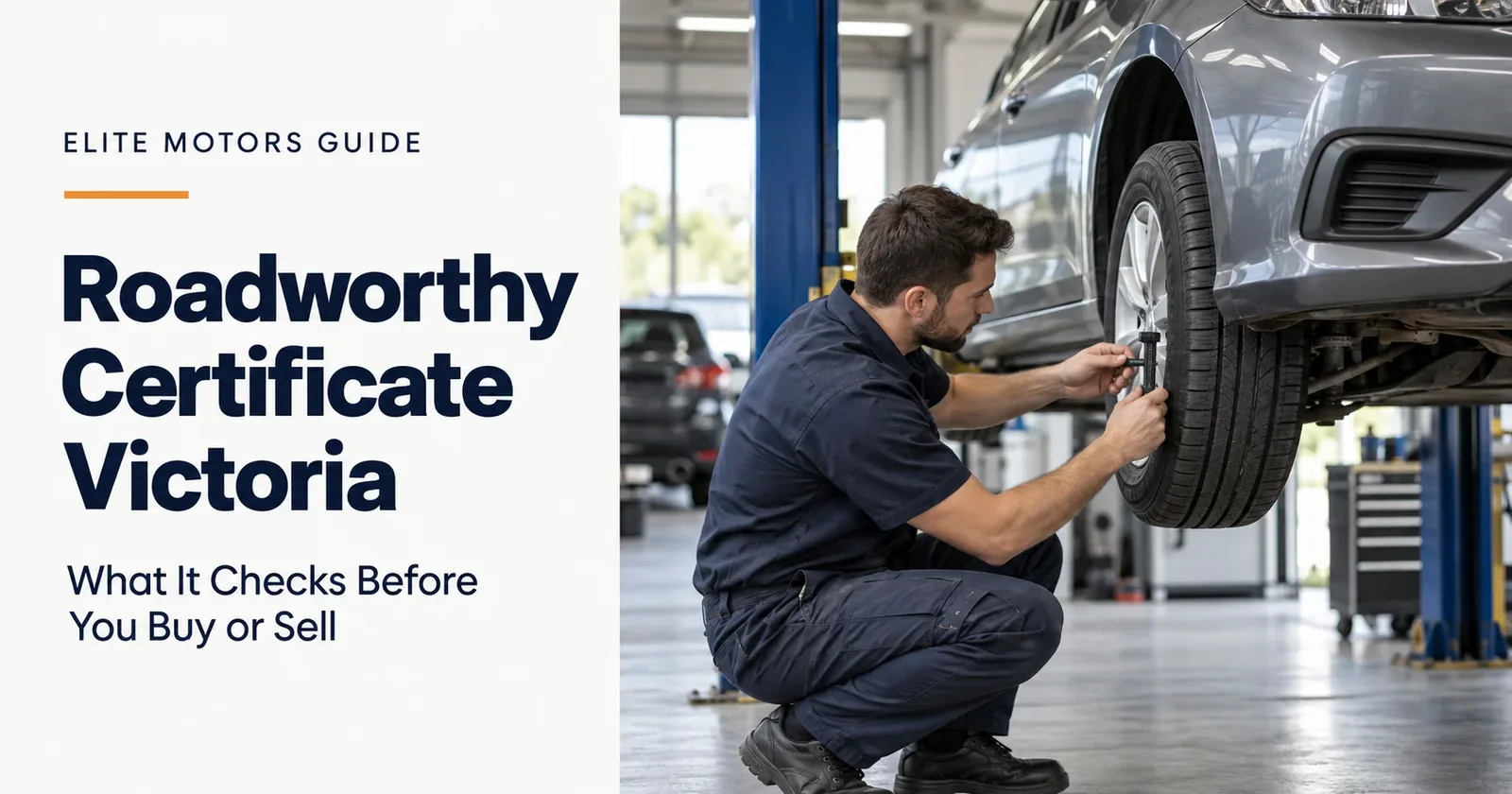
A roadworthy certificate in Victoria, also called a certificate of roadworthiness or RWC, confirms a vehicle met minimum safety standards on the day it was inspected. It stays current for 30 days from the date of issue. Only a licensed vehicle tester can issue one. The seller arranges it when selling a registered vehicle. It is a safety check, not a promise that the car is in good condition.
Key takeaways
- A roadworthy certificate covers safety items only. It says nothing about mechanical reliability, air conditioning or electric windows.
- The certificate lasts 30 days and can be used more than once. If the car fails, you have 14 days to repair it before a full new fee applies.
- Selling privately needs a certificate. Selling or trading in to a licensed dealer does not, and VicRoads lists every exempt transfer.
- A licensed dealer must give you a current certificate before you take the car. Consumer Affairs Victoria requires it.
- There is no set price. Cost depends on the vehicle's age, type and condition, so ask for a quote first.
What Does a Roadworthy Inspection Check?
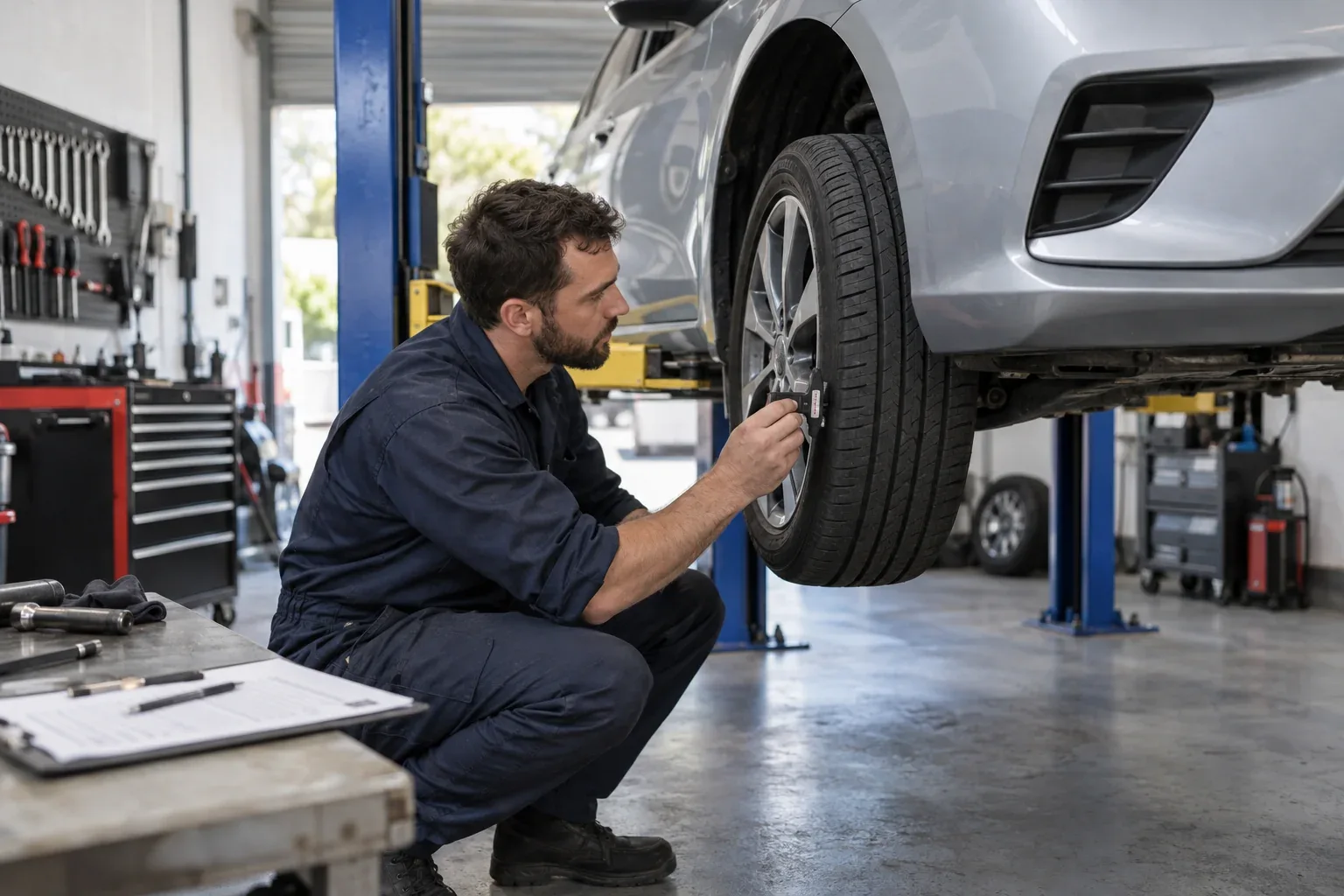
A roadworthy inspection checks the safety-related parts of a vehicle. A licensed vehicle tester works through the systems below and fails the car if any fall short of the standard. Transport Victoria sets that standard in Vehicle Standards Information 26, issued under the Road Safety (Vehicles) Regulations 2021. It applies to vehicles with a gross vehicle mass of 4.5 tonnes or less.
The table below shows what the tester inspects.
| System inspected | What the tester is looking at |
|---|---|
| Wheels and tyres | Tread depth, damage, correct fitment |
| Steering and suspension | Wear, play, damaged or broken components |
| Brakes | Braking performance, worn pads, leaks |
| Seats and seatbelts | Secure mounting, belt condition and operation |
| Lights and reflectors | Headlights, indicators, brake lights, reflectors |
| Windscreen and windows | Cracks and chips in the driver's line of sight |
| Wipers and washers | Front wipers and washers working properly |
| Exhaust and emission control | Leaks, excessive smoke, missing components |
| Body, chassis and structure | Rust, damage and structural integrity |
Smaller items are also checked, including the horn, the fuel system and the battery. A tester may fail a car on one worn tyre, so fix obvious faults first.
What a Roadworthy Certificate Does Not Cover
A roadworthy certificate is a safety snapshot, not a condition report. This is the point most buyers get wrong. Transport Victoria is clear that the certificate does not confirm mechanical reliability or general condition. It does not cover non-safety items such as air conditioning, electric windows and rear window wipers. It does not confirm compliance with the Australian Design Rules.
It also makes no promise about the future. A car can pass on Monday and develop a fault by Friday. Transport Victoria states plainly that a vehicle may not stay roadworthy for the full 30 days.
So a current certificate tells you the brakes and tyres were acceptable on inspection day. It tells you nothing about the gearbox, the timing chain or a tired clutch. For that, you need a pre-purchase inspection, which looks at condition and wear rather than the minimum safety standard. Elite Motors was founded by a mechanic and pre-inspects its stock through its own licensed VicRoads auto repair shop. Buyers are welcome to arrange an independent inspection too.
When Do You Need a Roadworthy Certificate in Victoria?
You need a roadworthy certificate when selling a registered vehicle, re-registering a used vehicle, or clearing certain defect notices. Several transfers are exempt, and the exemptions are where most money is saved.
| Situation | Certificate needed? |
|---|---|
| Selling a registered vehicle to a private buyer | Yes |
| Selling or trading in your car to a licensed dealer | No |
| Buying from a licensed motor car trader | Yes, the dealer must supply it |
| Transfer between two licensed dealers | No |
| Transfer to a current or former spouse or domestic partner | No |
| Re-registering a used vehicle | Yes |
| Registering a vehicle brought in from interstate | Yes, unless exempt |
| Clearing certain defect notices | Yes |
| Brand-new vehicle never registered anywhere | No, unless it will be a taxi |
| Light trailer, 4.5 tonnes aggregate trailer mass or less | No |
VicRoads lists the transfers that are exempt from a roadworthy certificate in full. A handful of vehicle types are exempt outright as well, and VicRoads publishes that list separately. Check whether your situation or your vehicle is exempt before booking an inspection you may not need.
How Long Does a Roadworthy Certificate Last?
A roadworthy certificate is current for 30 days from the date it is issued. You can use it more than once inside that window, so one certificate can cover a sale that falls through and a second soon after. Transport Victoria says you can use it for a transfer as long as you are inside those 30 days. A certificate that lapses before the transfer goes through no longer counts, which is what catches sellers out when a sale drags on.
Thirty days is a validity period, not a warranty. The certificate confirms what the tester found on the inspection date and nothing after it.
Who Pays for a Roadworthy Certificate?
In practice, the seller pays, because the duty to supply the certificate sits with the seller, though no Victorian rule actually names who hands over the money. When you sell a registered vehicle, you arrange the inspection, cover the cost and give the certificate to the buyer. The cost follows the duty to produce the document.
Dealers work to a stricter version of the same rule. Consumer Affairs Victoria requires a licensed motor car trader to give the buyer a current roadworthy certificate before they take possession of the car. The dealer must also lodge evidence with VicRoads within 14 days of the sale. That is a legal obligation, not a bonus, so a buyer should never be asked to collect the car without it.
Can You Sell a Car Without a Roadworthy Certificate?
Yes, in defined situations. If you sell or trade your car in to a licensed motor car trader, no roadworthy certificate is required for the transfer. The same applies to transfers between two dealers and to transfers between current or former spouses or domestic partners.
This is the practical escape route for anyone holding a car that would fail. Repairing it to pass can cost more than it adds to the sale price. Trading in to a licensed dealer removes the certificate, the repairs and the paperwork. Selling to a private buyer is different: unless the vehicle is exempt, you must supply a certificate.
How Much Does a Roadworthy Certificate Cost in Victoria?
There is no fixed fee for a roadworthy certificate in Victoria. Each licensed vehicle tester sets its own price, based on the vehicle's age, type and condition. Transport Victoria advises asking your tester for a quote before the inspection starts.
Repairs are almost always the larger cost, not the test itself. Ask what the quote covers, and whether a re-inspection within 14 days is included.
What Happens If Your Car Fails the Inspection?
The tester gives you a report listing the items that failed. You then have 14 days to repair those items and have the car checked again. Miss the 14 days, and you pay for a full new test.
If you think the result is wrong, there is a set path. Work through it in order.
Check the requirements in Vehicle Standards Information 26, then raise your concerns with the tester.
If that does not settle it, get a second test from a different licensed tester, ideally within 30 days of the first.
If the second test supports you and the first tester will not act, lodge a written complaint with Vehicle Safety Partners and Standards, attaching both certificates.
One limit is worth knowing before you start. The regulator can act on the tester's conduct but cannot order repairs or award compensation. Those are civil matters for VCAT or the Magistrates' Court. Transport Victoria sets out the full dispute process. Consumer Affairs Victoria may also help if you bought the vehicle from a licensed dealer.
Buying and Selling With Confidence in Dandenong
Treat the roadworthy certificate as the floor, not the finish line. It proves the safety basics were met on inspection day. The questions that decide whether a used car is a good buy sit outside it. Check the service history, and understand what the statutory warranty in Victoria covers once you own the car. Our guide to the documents you need to buy a used car covers the rest of the paperwork, and a written-off car check covers the history a roadworthy inspection never looks at.
Book a test drive at Elite Motors in Dandenong to see how a car feels on the road. You can also browse our current used vehicle listings to compare what is available. We are a licensed motor car trader, LMCT 9914, selling from the same Hammond Road site since 2003. Roadworthy status varies between vehicles, so ask about the specific car.
This article is general information about Victorian roadworthy rules, not legal advice. Rules and fees can change. Check the current Transport Victoria and VicRoads guidance, and speak to a licensed vehicle tester or Consumer Affairs Victoria about your own situation.
Frequently Asked Questions
Which vehicles are exempt from needing a roadworthy certificate?
Brand-new vehicles never registered anywhere are exempt, unless they will be used as a taxi. Light trailers of 4.5 tonnes aggregate trailer mass or less are also exempt. So are recreational motorcycles, Farm Bike Scheme motorcycles, quad bikes and ATVs classed as special work vehicles, and specially constructed vehicles such as forklifts and tractors.
Can I dispute a roadworthy certificate result?
Yes. Raise it with the tester first, using Vehicle Standards Information 26 as your reference. If that fails, get a second test from a different licensed tester, ideally within 30 days, and lodge a written complaint with Vehicle Safety Partners and Standards, attaching both certificates. Compensation claims go to VCAT or the Magistrates’ Court instead.
Do I need a roadworthy certificate to transfer registration?
Usually yes, and it must still be within its 30-day window when the transfer goes through. Several transfers are exempt, including selling to a licensed dealer, dealer-to-dealer transfers and transfers between current or former spouses or domestic partners. Check the VicRoads exemption list before booking an inspection you may not need.
Does a roadworthy certificate mean the car has no problems?
No. It confirms that safety items such as brakes, tyres, steering and lights met the minimum standard on the inspection date. It does not cover mechanical reliability, general condition, air conditioning or electric windows, and it does not promise the car stays roadworthy for the full 30 days.