
Best Used Utes and Vans for Tradies: How to Choose a Work Vehicle
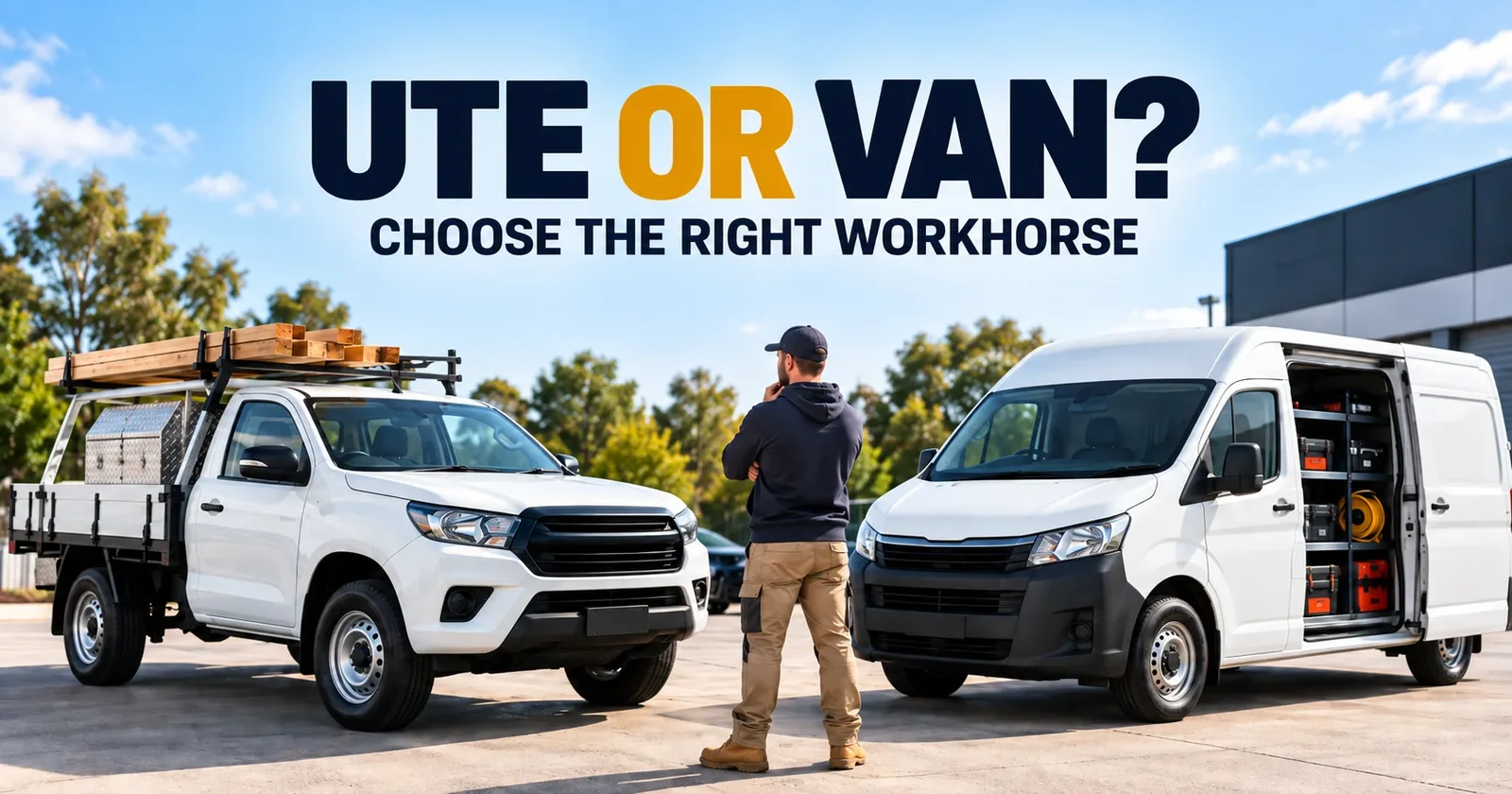
The best used ute or van for a tradie is the one whose payload covers the daily load and the body shape the work needs. A ute carries long, dirty and oversized materials on an open tray. A van carries tools and stock in a lockable, weatherproof load space. Check the payload on the compliance plate before the badge on the tailgate.
The short answer
Buy a used ute if you carry length, tow most weeks, or work on unsealed sites. Buy a used van if your tools and stock are the business and they need to stay dry and locked away. Either way, shortlist only vehicles whose payload covers your real daily load with room to spare, then judge the individual vehicle on its service history and its condition underneath.
Key takeaways
Utes carry long, dirty and oversized loads. Vans carry tools and stock that must stay dry and locked away.
Payload equals gross vehicle mass minus basic kerb weight. The GVM is stamped on the compliance plate.
A canopy, drawers, racks and shelving all come out of that payload before you load a single item.
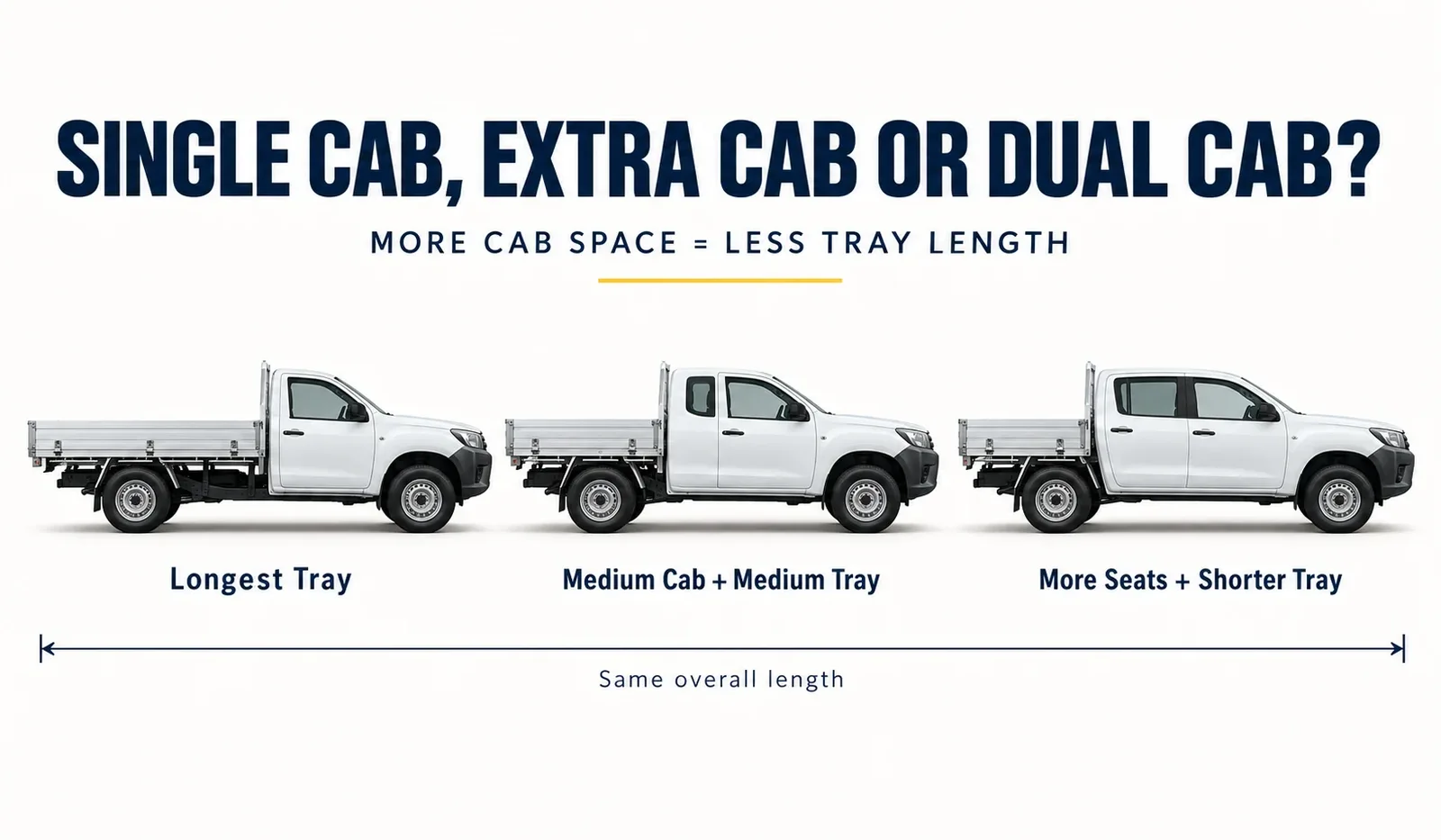
More cab means less tray. A single cab gives the longest tray, while a dual cab gives the shortest.
In Victoria, the used car statutory warranty does not apply to commercial vehicles.
A roadworthy certificate confirms a vehicle is safe to drive now. It is not a statement of mechanical reliability, and it lasts 30 days.
A Victorian car licence covers vehicles up to 4.5 tonnes GVM. Above that, you need a heavy vehicle licence.
The $20,000 instant asset write-off became permanent on 1 July 2026 for businesses turning over under $10 million.
Best Used Work Vehicle by Trade
Match the body shape to the load you carry most days. This table answers the question for the six most common trade profiles.
Trade | Best Choice | Why |
|---|---|---|
Carpentry, plumbing, fencing | Single cab or cab chassis ute | Longest tray on the same wheelbase. Timber and pipe load over the side and do not need to stay dry |
Electrical, refrigeration, mobile servicing | Mid-size van | Tools and stock stay dry, locked and organised on shelving. Lower theft risk parked overnight |
Landscaping, earthworks, rural | Dual cab 4x4 ute | Unsealed access, towing and crew in one vehicle. A tipper body saves shovelling the load out |
Delivery, removals, bulky loads | Large van | Cubic metres matter more than payload. Loads at waist height through a rear or side door |
Painting, tiling, flooring | Compact or mid-size van | Stock stays clean and dry. Shelving keeps materials from shifting in transit |
Mixed trade work with a crew | Dual cab ute plus canopy | Seats five and locks the load away, at the cost of the shortest tray |
Ute vs Van: The Key Differences
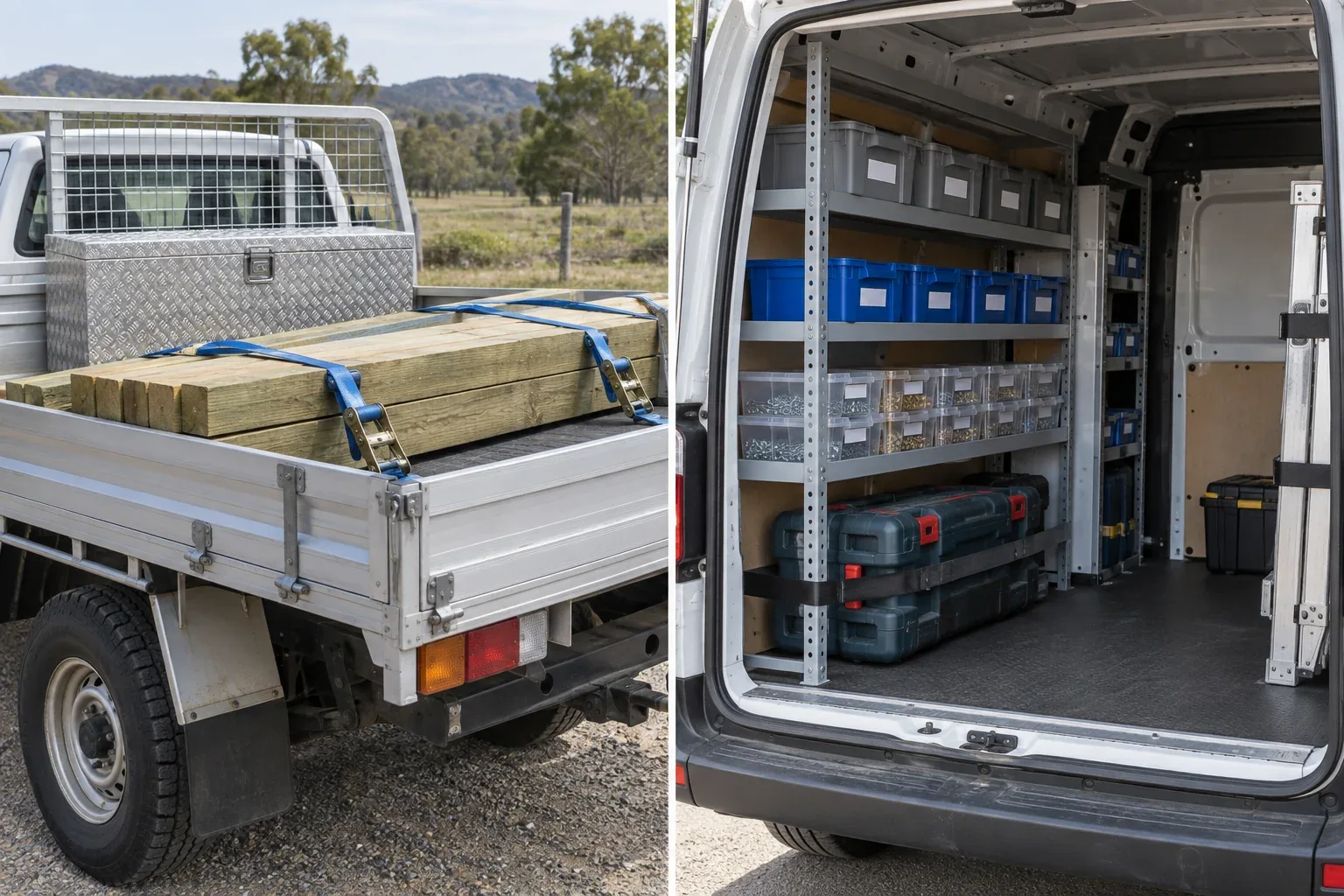
The difference is the sides. A ute has an open tray with a low wall. A van has an enclosed body with a lockable door. That single design difference drives every other trade-off.
USED UTE | USED VAN |
|---|---|
|
|
Feature | Used Ute | Used Van |
|---|---|---|
Load shape | Long, bulky, awkward or dirty items | Boxed tools, parts, stock and equipment |
Security | Open unless you add a canopy or toolboxes | Lockable load space as standard |
Weather protection | Exposed unless covered | Fully enclosed |
Fit-out | Toolboxes, drawers, racks, canopy | Shelving, drawers, ply lining, roof racks |
Towing | Usually the stronger option | Lower capacity on most models |
Height limits | Fits most car parks and driveways | High-roof models can be too tall for some car parks |
Rough access | 4x4 versions suit unsealed and muddy sites | Mostly two-wheel drive |
How Much Payload Do You Need?
Add up your crew, your tools, your usual materials and your planned fit-out, then shortlist only vehicles whose payload covers that total with room to spare.
This example is illustrative. Use the figures on the vehicle you are inspecting.
Line Item | Weight | Running Total |
|---|---|---|
GVM on the compliance plate | 3,000 kg | Maximum loaded weight |
Less basic kerb weight | 2,100 kg | Payload: 900 kg |
Two workers and their gear | 200 kg | 700 kg left |
Steel canopy and drawers | 150 kg | 550 kg left |
Available for materials | - | 550 kg, before any tow ball download |
A pallet of tiles or a few bags of cement moves that number quickly, which is why the fit-out has to be counted before the load.
What Eats Your Payload
Every kilogram you bolt on comes out of the payload you paid for.
Added to a Ute | Added to a Van |
|---|---|
Alloy or steel tray | Metal or ply shelving |
Canopy or hard lid | Drawer systems |
Toolboxes and drawers | Ply lining and floor |
Ladder and roof racks | Roof racks and ladder rack |
Tow bar and cargo barrier | Cargo barrier and bulkhead |
Tow ball download when towing | Tow ball download when towing |
⚠ Warning: an overloaded work vehicle is a compliance problem, not just a handling one. Buying a vehicle that already sits close to its limit on a normal day is how tradies end up overloaded. Overloading affects braking, handling, insurance and compliance. Work out your real daily load before you shop, not after. |
|---|
Single Cab, Extra Cab or Dual Cab?
Seats and tray length compete for the same wheelbase. More cab means less tray.
Configuration | Seats | Best For |
|---|---|---|
Single cab | Two or three | One-person trades that carry length, such as carpentry, plumbing or fencing. Longest tray |
Extra or king cab | Two, plus rear space | Tools, jackets and paperwork behind the seats. A middle ground when you rarely carry passengers |
Dual cab | Five | Carrying apprentices or crew, or a vehicle that doubles as family transport. Shortest tray |
A cab chassis is available in all three shapes. It lets you fit a tray, tipper, service body or tradesman body sized for your work, rather than living with the factory tub.
Which Models Do Australian Tradies Buy?
There is no single best model for every trade. Choose the class that fits your load, then judge the individual vehicle on condition, service history and payload rather than its badge.
Class | Models Commonly Bought by Australian Tradies | Typical Work |
|---|---|---|
Dual cab 4x4 ute | Toyota HiLux, Ford Ranger, Isuzu D-Max, Mitsubishi Triton, Mazda BT-50, Nissan Navara, Volkswagen Amarok, Holden Colorado | Site access, towing, carrying a crew |
Single cab/cab chassis | The same model families in single cab and cab chassis form | Maximum tray length, trays, tippers, service bodies |
Compact van | Volkswagen Caddy, Renault Kangoo | Service calls, small parts, tight city parking |
Mid-size van | Toyota HiAce, Ford Transit Custom, Volkswagen Transporter, Renault Trafic, Hyundai iLoad, Mercedes-Benz Vito | Everyday trade work with shelving and stock |
Large van | Ford Transit, Renault Master, Mercedes-Benz Sprinter, LDV Deliver 9 | High volume loads, long items, delivery work |
This table describes the market, not current stock. Diesel suits high-kilometre towing and load carrying because of the pulling power at low engine speeds. Petrol can suit lower-kilometre, around-town work. You can see which manufacturers the dealership lists on its used car brand pages.
How to Inspect a Used Work Vehicle
Work vehicles live a harder life than family cars. Check the plate, the paperwork and the underside before you check the paint.
Read the compliance plate. Confirm the GVM, then check the payload against your real daily load.
Ask for the service history. Logbooks and invoices tell you how a high-kilometre vehicle was treated.
Look underneath. Check the chassis, tray mounts and rear suspension for rust, cracks, heavy sagging or crude repairs.
Check for signs of hard use. A worn tow ball, bent tow bar, flattened rear springs, damaged tray edges and a heavily worn driver's seat all point to constant loaded work.
Inspect the load area. In a van, look for water stains, poor shelving mounts and damaged door seals. In a ute, look for a rotted tray floor or a tub hiding corrosion.
Run a PPSR search. A search on the vehicle identification number costs $2 and shows whether the vehicle is recorded as free from debt. It can also show whether it is recorded as stolen or written off.
Check recalls and tyres. Confirm any open recalls have been completed, and check tyre age and wear, because commercial tyres are expensive to replace.
Drive it with a load in mind. Listen for clutch slip, gearbox noise, turbo lag, smoke on acceleration and brake shudder.
Arrange an independent inspection. Transport Victoria recommends a separate inspection when you want an assessment of a vehicle's overall condition and reliability.
How Many Kilometres Is Too Many?
There is no fixed cut-off. A diesel work vehicle with 200,000 km and complete logbooks can be a better buy than a neglected example with 120,000 km.
What Decides It | What to Look For |
|---|---|
Service record | Timing belts or chains, clutches, diesel particulate filter maintenance, stamped logbooks |
Type of work done | Highway kilometres are gentler than constant loaded stop-start work |
Maintenance due next | Price the next major service before you commit, not after |
💡 Tip: kilometres change your consumer position, not just your maintenance bill. The Victorian used car statutory warranty from a licensed motor car trader applies to vehicles less than 10 years old that have travelled less than 160,000 kilometres. Build date and odometer both matter. |
|---|
What a Roadworthy Certificate Does Not Tell You
A roadworthy certificate shows a vehicle is safe enough to drive on public roads now. Transport Victoria states it does not guarantee mechanical reliability and does not describe the general condition of the vehicle.
What Is Inspected | What Is Not |
|---|---|
Wheels and tyres | Whether the vehicle is mechanically reliable |
Steering, suspension and brakes | The general condition or wear of the vehicle |
Seats and seatbelts | Non-safety items such as air conditioning or electric windows |
Lights and reflectors | Whether the checked items will keep working afterwards |
Windscreen, windows and wipers | Full compliance with every Australian Design Rule |
Vehicle structure and body | Anything beyond the published inspection list |
A certificate stays current for 30 days from the date it is issued. In Victoria, one is needed when selling a registered vehicle, re-registering one, or clearing some defect notices. Check the individual listing to confirm what is included with the vehicle you are considering.
Warranty on a Work Vehicle
Licensed motor car traders must provide a statutory warranty on used cars less than 10 years old that have travelled under 160,000 kilometres. It runs for three months or 5,000 kilometres, whichever comes first.
⚠ Warning: commercial vehicles are excluded from the statutory warranty in Victoria. Consumer Affairs Victoria lists motorcycles, commercial vehicles and cars sold at public auction as exempt. This is the point most tradie buying guides miss. Ask the dealer directly whether a statutory warranty applies to the specific vehicle you are looking at, and read the defect notice attached to it. Separate aftermarket warranty products are often available, with their own conditions and exclusions, and your rights under the Australian Consumer Law still apply afterwards. |
|---|
Safety Ratings on Older Work Vehicles
ANCAP applies a "TESTED" datestamp to every rating, and the criteria get harder every three years. A five-star result from an older datestamp was earned against easier requirements.
ANCAP recommends choosing a vehicle with the highest rating available and a datestamp no older than six years. That is hard to achieve on an older used work vehicle, so use the datestamp to compare like with like, and check which safety features the exact variant has.
Budget and Running Costs
Compare the total cost of getting the vehicle work-ready, not just the purchase price. A cheaper ute that needs a tray, a canopy and a set of tyres may cost more than a dearer one that is ready to work.
Budget Level | What You Get | What to Budget For |
|---|---|---|
Entry | Older vehicles with higher kilometres | Early maintenance, tyres, brakes and servicing |
Mid | Newer build years, moderate kilometres, more complete history | Fit-out, and any outstanding scheduled service items |
Higher | Later models, lower kilometres, longer remaining life | Less immediate work, better chance of a recent ANCAP datestamp |
Used prices move with the market, so treat these as trade-offs rather than fixed price brackets. Work out the repayment side at the same time. Vehicle finance options may be available, subject to application, eligibility, lender criteria and approval.
Tax, FBT and Licence Rules
This section is general information, not tax advice. Talk to a registered tax agent about your own situation.
Rule | What It Means for a Used Ute or Van |
|---|---|
Instant asset write-off | Permanent from 1 July 2026 for businesses under $10 million turnover. Immediate deduction for the business portion of eligible assets costing under $20,000 |
Second-hand eligibility | Second-hand assets are generally eligible, though some exclusions and limits apply |
Trade-ins | The full cost is worked out on the purchase price before any trade-in credit is applied |
Assets over $20,000 | Go into the small business pool instead. 15% in the first income year, 30% each year after |
Car cost limit | Applies to vehicles designed to carry under nine passengers and a load under one tonne. Vehicles that are not passenger vehicles sit outside it |
FBT eligible vehicles | Single cab utes, panel and goods vans, and dual cabs designed to carry one tonne or more |
Limited private use | Home to work travel, travel incidental to work duties, and private use that is minor, infrequent and irregular |
Dual cabs under one tonne | Can still be eligible where not designed principally for carrying passengers. The ATO explains the test in MT 2024 |
Victorian car licence | Vehicles up to 4.5 tonnes GVM, seating up to 12 adults. Towing a single trailer up to 9 tonnes GVM or the manufacturer's specification, whichever is less |
Heavy vehicle licence | Required for any vehicle above 4.5 tonnes GVM. Most utes and vans sit below it, but the largest vans and some GVM-upgraded vehicles do not |
Buy Your Next Work Vehicle at J & V Elite Motors
J & V Elite Motors has sold used vehicles from Hammond Road in Dandenong since 2003, which is more than 20 years in the same location. The dealership is family-operated, holds motor car trader licence LMCT 9914, pre-inspects its vehicle stock through a licensed VicRoads auto repair shop, and runs its own service centre for customers after the sale. It is also an approved Australian Warranty Network Dealer, and trade-ins are accepted.
Finance options may be available, subject to application, eligibility, lender criteria and approval. Warranty options may be available. Ask J & V Elite Motors about coverage for the vehicle you are considering. Buyers across Noble Park, Springvale, Keysborough and Mulgrave are within a short drive of the Dandenong dealership.
Call the team or book an inspection and test drive to see how a shortlisted vehicle handles your real daily load.
Frequently Asked Questions
Can I Claim a Used Ute or Van on Tax?
Eligible small businesses can claim an immediate deduction for the business portion of an eligible asset costing less than $20,000 under the instant asset write-off, which became permanent from 1 July 2026. Second-hand vehicles are generally eligible. Most used work vehicles cost more than $20,000, and those are usually added to the small business pool instead. Confirm your position with a registered tax agent.
Do I Pay FBT on a Work Ute?
Often you do not. Limited private use of an eligible vehicle, such as a single cab ute, a goods van or a dual cab designed to carry one tonne or more, is exempt from fringe benefits tax. The exemption covers home-to-work travel, travel incidental to work, and private use that is minor, infrequent and irregular. Go beyond that, and the exemption no longer applies.
Is a Dual Cab That Carries Less Than One Tonne Still Eligible?
It can be. The ATO's MT 2024 sets out when a dual cab that carries less than one tonne is not designed principally for carrying passengers, which is the test that decides eligibility. It is a technical assessment, so check it with your tax agent.
What Licence Do I Need to Drive a Large Van in Victoria?
A car licence covers anything up to 4.5 tonnes GVM with seating for up to 12 adults, which includes almost all vans sold for trade use. Above 4.5 tonnes GVM, you need a Victorian heavy vehicle licence. The GVM is on the compliance plate.
Are Used Vans Secure Enough for Tools?
A van's lockable, enclosed load space is a real advantage over an open tray, but a standard van is not safe. Tradies commonly add a cargo barrier, lockable drawers or a job box, an alarm or upgraded locks, and window film or blanked windows. Ask what security equipment is already fitted before you budget for more.
Does a Used Work Vehicle Need a Roadworthy Certificate in Victoria?
A roadworthy certificate is required when a registered vehicle is sold, re-registered, or cleared of some defect notices, with some exemptions. It confirms the vehicle is safe to drive now. It is not a statement that the vehicle is mechanically reliable, and it stays current for only 30 days.